


Product
Featured



TL;DR: Architecture studios need job management tools that centralise workflows, enhance client communication, and reduce admin tasks. These tools streamline operations, support resource planning, and improve collaboration with features like centralised documents, real-time dashboards, and customisable templates. WorkflowMAX integrates with platforms like Xero or QuickBooks, offering seamless invoicing and financial tracking. Adaptable systems are key—they support changing workflows, empower design teams, and help studios scale. Choosing the right tool means aligning software capabilities with your creative and business goals, enabling smoother operations and long-term success.
Job management tools are crucial for architecture studios aiming to boost workflow efficiency and streamline project management. These tools centralise tasks, making it easier for team members to collaborate and communicate seamlessly.
For architects, managing client relationships is crucial. Job management tools help by organising client interactions and keeping track of project progress. This enhances customer satisfaction and supports business growth.
Operational clarity is another benefit. These tools offer valuable insights into project timelines and resource allocation, enabling studios to make informed decisions. With robust reporting features, architects can analyse productivity and performance, ensuring projects stay on track.
By reducing administrative burdens, job management tools allow architects to focus on creative work. Customisable features ensure the software fits specific business needs, making it a flexible solution for diverse workflows.
WorkflowMAX offers all these advantages, integrating smoothly with existing systems like Xero. This makes financial tracking and invoicing straightforward, saving time and reducing errors.
Architecture studios can maintain their competitive edge by adopting job management tools that simplify processes and improve efficiency. Choosing the right tool means supporting both operational needs and long-term business goals.
Exploring job management tools for architecture studios means focusing on features that enhance workflow. Consider project-based sales integration. This aligns business goals with operational tasks, streamlining operations from concept to completion.
Your tools should be configurable. They should be able to adapt to specific workflows without requiring IT expertise. Customisable templates and notifications empower studios to tailor software to their needs, offering flexibility for various projects.
You need centralised data management. Storing all documents in one place ensures accessibility and organisation. This feature supports collaboration and reduces the risk of losing vital information, enhancing efficiency.
Relationship intelligence and lead qualification functionalities help understand client needs and improve project profitability. Efficient client management tools nurture relationships, generate leads, and secure more work, ultimately contributing to business growth.
At WorkflowMAX, we provide these essential features, making us a valuable choice for your architecture studio. Our job management capabilities integrate with Xero, offering a robust solution for managing projects, invoicing, and financial tracking—all in one platform.
Software architecture is essential in job management tools for architecture studios. It accommodates diverse roles and responsibilities, supporting both technical specialisations and management paths.
Good software design offers programming aids that streamline complex tasks. This helps architects focus on creativity while handling technical details efficiently. Mentoring modules within the software foster career development, enabling experienced professionals to guide emerging talent.
Practical communication tools enable team members to collaborate more effectively. They allow clear dialogue, ensuring everyone stays aligned. This supports smooth project execution and improves workflow.
Our software integrates these features to enhance architectural practices. With customisable templates and notifications, architects can tailor workflows to their specific needs. This helps our software meet each studio's unique requirements.
Centralised document management supports collaboration by keeping all project documents accessible and organised. This reduces the risk of misplaced information and strengthens teamwork.
Incorporating these elements into software architecture boosts operational efficiency and supports career growth within architecture studios. By addressing both technical and managerial needs, job management tools provide a complete solution for studio operations.
Job management tools shape studio culture and efficiency. They streamline processes, encourage structured work habits and maximise productivity. Treating studio hours as dedicated work time helps prevent inefficiencies and enhances focus and productivity.
Good time management matters. These tools assist by organising tasks and scheduling, allowing architects to allocate time wisely. Real-time performance dashboards provide valuable insights, enabling studios to adjust plans and maintain workflow efficiency quickly.
Late changes can disrupt project outcomes. Management tools minimise this impact by improving idea presentation and review processes. With the right tools, studios can handle adjustments smoothly, ensuring projects stay on track.
Customisable features, such as templates and notifications, adapt to specific studio needs. These empower architects to tailor workflows, maintaining flexibility while prioritising important tasks. Centralised document management ensures easy access to project files, reducing the risk of losing vital information and strengthening collaboration.
We offer seamless integration with systems like Xero, simplifying financial tracking and invoicing. This reduces administrative burdens, allowing architects to focus on creative tasks and improve efficiency.
Using job management tools, architecture studios cultivate better work habits and streamline their processes. The right tools support structured work environments, enabling studios to thrive in managing complex projects and client relationships.
Adaptable job management tools are crucial for architecture studios. They meet the demands of dynamic workflows and evolving project requirements. Configurable solutions help address these needs by allowing customisation, whether it's through custom templates or notifications.
Static systems lack the flexibility required for innovative practices. Architects require tools that can evolve with their projects, accommodating changes in design and evolving client expectations. Tools that enable expertise showcasing and client-focused proposal delivery are essential. These features demonstrate the studio's skill and professionalism, enhancing client relationships.
WorkflowMAX offers customisation options that adapt to specific workflows. Customisable invoicing ensures accurate billing while maintaining a professional image. Centralised document management ensures all project documents are easily accessible, supporting collaboration and preventing information loss.
Efficient client management features boost leads and nurture client relationships. WorkflowMAX offers valuable insights into productivity and performance through its powerful reporting tools. This data-driven approach helps optimise operations and improve profitability.
Choosing the right tools means prioritising adaptability and client focus. WorkflowMAX integrates seamlessly with Xero, simplifying financial tracking and invoicing. This reduces administrative burdens, allowing architects to concentrate on creativity and project execution.
Incorporating the right job management tools into architectural practices brings clear benefits. These tools streamline project tasks, boost productivity and improve project completion rates. They enhance team collaboration by centralising communication, keeping everyone aligned.
Clients feel more satisfied when you use organised project tracking and client management features. Managing client interactions efficiently fosters stronger relationships and enhances trust, ultimately driving growth in your practice.
The best tools scale and adapt over time. Scalable solutions help sustain your success by making it easy to adjust to changing needs. By integrating seamlessly with your existing processes, these tools facilitate the evolution of your architectural practice.
Our WorkflowMAX solution delivers these advantages through features like customisable templates and centralised document management.
Book a demo with us!
TL;DR: Inefficient workflows in architecture lead to missed deadlines, budget overruns, and unhappy clients. To stay competitive, firms must embrace streamlined processes that reduce stress and errors. Visual clarity in design, effective contract and resource management, and strong team retention strategies are key. Tools like WorkflowMAX centralise project tasks, automate admin work, and provide real-time insights. By simplifying communication, improving efficiency, and supporting team growth, architecture firms can deliver better results and maintain strong client relationships.
Efficient workflows in architecture are vital. They boost productivity, reduce costs, and keep clients happy. When workflows are inefficient, projects can go over budget, deadlines can be missed, and client relationships can become strained. That's a recipe for losing clients and wasting time.
Imagine constantly battling with over-budget projects and missed deadlines. It’s frustrating for everyone involved. Architects need tools and strategies that streamline processes, allowing them to focus on meeting objectives without unnecessary hassle. A streamlined workflow means fewer errors, less stress, and more successful outcomes.
Using project management software can help. It centralises tasks, reducing administrative burdens and improving workflow efficiency. By tracking time spent on tasks and setting clear milestones, architectural firms can optimise their processes. This leads to better planning and execution, fostering stronger client relationships.
Ultimately, efficient workflows are about clarity and focus. They help architects deliver projects on time and within budget, enhancing client satisfaction. Embracing the right tools and strategies is crucial for maintaining a smooth operation and achieving success in every project.
Visual clarity is crucial in architectural design. It helps convey ideas effectively to clients and stakeholders. When designs are overloaded with excessive details, the core message can become blurred, leading to confusion and inefficiency.
Imagine trying to explain a complex design with too many elements. It’s easy to lose focus and make the presentation unclear. Simplifying visuals ensures that the main ideas are communicated directly and effectively. This clarity not only enhances understanding but also strengthens client trust and engagement.
Streamlined presentations are key. Utilise clean layouts and focused imagery to highlight key components effectively. This approach enables clients to understand the vision better and feel confident in the project's direction. Clear visuals help reduce misunderstandings and expedite decision-making processes.
Workflow efficiency benefits from simplicity. By incorporating tools like WorkflowMAX, architectural firms can centralise tasks, manage documentation, and improve workflow clarity. This leads to smoother operations and better project outcomes.
Effective communication is about simplicity and purpose. Focus on essential details and use tools to enhance clarity. By adopting these strategies, architects can ensure that their designs communicate effectively and resonate with all stakeholders involved. This focus on clarity boosts productivity and client satisfaction, paving the way for successful projects.
Efficient resource and contract management in architecture is key. Managing resources and contracts effectively streamlines operations, reduces administrative overhead, and leads to successful project outcomes.
Time-and-materials contracts are standard in architectural projects. They provide flexibility by charging clients based on the actual work done. Planning payment milestones ensures clarity and helps manage cash flow. These strategies foster trust and transparency, making it easier to keep projects on track.
Utilising tools like WorkflowMAX can simplify contract management:
Streamlining contract management with practical tools and strategies enhances project clarity. It ensures resources are allocated correctly, contracts are managed smoothly, and projects are delivered successfully. By focusing on these areas, architectural firms can boost productivity and client satisfaction, leading to long-term success.
Retaining skilled team members and optimising workflows are crucial for delivering projects successfully and keeping clients satisfied. Happy teams lead to better collaboration, creativity, and efficiency.
Creating a supportive environment helps. Encourage open communication and teamwork. When people feel valued, they're more motivated and engaged. This boosts morale and keeps talented individuals on board.
Leverage technology to streamline tasks. Automating repetitive processes frees up time for creative work. Tools like WorkflowMAX can centralise job management, making it easier to handle scheduling, invoicing, and reporting. This reduces administrative burdens and keeps projects running smoothly.
Focus on continuous learning. Providing training and development opportunities keeps skills sharp and aligns teams with industry advancements. It's essential for maintaining a competitive edge and ensuring everyone is proficient with new tools.
Book a demo with us!
TL;DR: In 2025, architecture clients expect more than design—they demand sustainability, transparency, and efficiency. Firms must adopt smart project management systems, embrace eco-friendly practices, and prioritise communication. Cloud tools like WorkflowMAX help streamline collaboration, automate tasks, and centralise financial and project tracking. As climate regulations tighten, aligning with compliance standards becomes essential. By adapting to these expectations and using the right technology, firms can boost their reputation, stay competitive, and lead in innovation.
In 2025, clients expect architecture firms to blend innovation with responsibility. Structured processes aren't just a bonus; they're essential. Efficient project management and technological integration are now baseline requirements.
Sustainability is more than a buzzword. With climate policies tightening, clients demand environmentally responsible practices. Firms must adapt to these preferences, ensuring designs are eco-friendly and resource-efficient.
Technology plays a crucial role. Digital tools streamline workflows and enhance collaboration, allowing firms to meet deadlines and maintain quality. Embrace solutions that integrate seamlessly with existing systems for smooth operations.
The focus is on transparency and communication. Clients want clear updates on project progress and costs. Features like real-time dashboards and centralised document management can support this, offering instant access to data and fostering trust.
Architecture firms must align their services with these evolving expectations. By prioritising sustainability, embracing technology, and enhancing communication, firms can meet client demands and thrive in 2025.
In 2025, modern architecture firms are expected to adopt systematic project management tools. These tools keep everything organised and ensure deadlines are met. They play a crucial role in budgeting, scheduling, and task management, helping firms stay on track.
Automating repetitive tasks boosts productivity. By reducing manual work, firms can focus on creativity and innovation. Automation ensures that routine processes run smoothly, saving time and resources.
Budgeting becomes more straightforward with these systems. They provide clear insights into project costs, enabling firms to manage their finances efficiently. Accurate financial tracking is crucial for maintaining profitability and ensuring projects stay within budget.
Scheduling is streamlined. Project management tools provide detailed timelines and schedules, enabling effective resource allocation. This ensures that all team members know their responsibilities and project milestones.
Task management is simplified. Firms can assign tasks, track progress, and ensure everything is completed on time. This enhances collaboration and keeps everyone aligned with project goals.
Embracing these tools means better organisation and efficiency. They enable architecture firms to deliver high-quality projects while meeting client expectations. The focus is on smooth operations and successful project completion.
Sustainability is at the forefront of architecture projects in 2025. Clients demand energy-efficient designs and low-carbon buildings, expecting firms to prioritise environmental responsibility from the start.
Energy-efficient designs cut operational costs and attract more clients. Clients recognise the financial advantages of green-certified buildings, including lower utility bills and higher property values. Sustainability helps both the environment and profits.
Low-carbon buildings win premium projects. Firms with strong sustainability credentials stand out from competitors, building a better reputation. Clear reporting of ESG initiatives fosters trust and appeals to clients who value environmentally friendly solutions.
Sustainability enhances a firm's reputation. Clients prefer firms that embed sustainable practices, viewing them as leaders in innovation. This reputation often leads to bigger, higher-quality projects.
Meeting sustainability requirements matters. Firms that embrace sustainability gain an edge in today's market. This focus on sustainability is essential for future success.
Enhancing team performance is crucial for architecture firms in 2025. Consistent metrics and shared dashboards keep everyone informed. These tools provide a clear view of project progress and team contributions, making collaboration seamless.
Streamlined communication is essential. Clear channels for updates ensure that everyone stays aligned with project goals. This reduces misunderstandings and helps teams work efficiently.
Shared dashboards offer transparency. Team members can access real-time data, understand their responsibilities, and see the impact of their work on overall progress. This fosters accountability and encourages proactive problem-solving.
Consistent metrics drive performance. By tracking key indicators, firms can identify areas for improvement and celebrate successes. Metrics provide a foundation for strategic decisions, helping teams stay focused and motivated.
WorkflowMAX enhances collaboration with centralised document management and real-time performance dashboards. Teams can access information easily, ensuring that no details are overlooked. This supports efficient collaboration and project updates.
Optimising collaboration means projects run smoothly. With the right tools, architecture firms can enhance team performance, meet client expectations, and succeed in 2025.
Centralising financial and project information is crucial for architecture firms in 2025. It reduces inefficiencies and streamlines operations. When financial data and project updates are housed together, firms gain real-time insights that enhance decision-making and maintain cash flow.
Real-time tracking lets firms monitor project progress and financial health simultaneously. This visibility helps anticipate risks and make timely adjustments. Accurate budgeting and scheduling become easier, ensuring projects stay on track and within budget.
WorkflowMAX offers seamless integration with Xero, synchronising financial data effortlessly. This eliminates double data entry and enhances efficiency. With features like customisable invoicing and comprehensive job management, firms can track costs and manage resources effectively.
Powerful reporting tools provide detailed insights into productivity and profitability. Firms can analyse data to optimise operations and improve revenue forecasting. This centralisation supports strategic planning and boosts financial performance.
Automating routine processes, such as invoice generation, reduces payment delays and supports a healthy cash flow. By capturing every minute of work with comprehensive time tracking, firms ensure all billable time is recorded.
Integrated financial and project tracking is not just about efficiency; it's essential for thriving in 2025. Architecture firms require these tools to deliver high-quality projects and meet the evolving expectations of their clients.
Urban laws and building standards are shaping architectural practices. Firms must design for future compliance with stricter codes. Understanding these regulations is crucial for success.
Designing for compliance means anticipating changes in building standards. Firms need to integrate sustainable practices into their designs proactively. This ensures projects meet evolving requirements without costly adjustments later.
Carbon accounting and emissions management are vital. Implementing certified carbon accounting software supports accurate measurement and management of emissions. It simplifies data collection and helps set science-based targets.
Best practices in emissions management include calculating emissions following scientific standards. Customisable dashboards offer in-depth analysis, enabling firms to develop tailored decarbonisation plans. Regular forecasting of future emissions and cost risks keeps firms aligned with net-zero goals.
Regulations like the EU's Corporate Sustainability Reporting Directive demand disclosure of sustainability information. Non-compliance risks legal penalties and lost business opportunities. Firms must develop robust compliance strategies to align with these evolving regulations.
WorkflowMAX enhances compliance efforts. Its features support streamlined operations, ensuring firms can focus on meeting regulatory demands efficiently.
Adapting to climate policies is essential for thriving in architecture. By prioritising compliance and sustainability, firms can navigate regulatory impacts and build a reputation for responsible innovation.
In 2025, architecture firms have a fantastic opportunity to lead in sustainable design. Clients are looking for innovations that prioritise the environment, and firms that embrace green practices will stand out. Creating energy-efficient, low-carbon structures not only meets client expectations but also enhances reputations.

TL;DR: Architects are embracing cloud tools to streamline project planning, improve collaboration, and gain real-time insights. Spreadsheets and outdated systems slow productivity, while cloud platforms enable flexible, centralised data access and scalable operations. Challenges to adoption—like user resistance—can be overcome with proper training, gradual rollout, and leadership support. Strategic tool selection focuses on scalability, integration (like with Xero), and team-friendly features. Cloud roles now demand skills in digital collaboration, security, and continuous learning. WorkflowMAX offers architects the tools to manage clients, track jobs, and stay competitive in an evolving industry.
Architects are turning to cloud-based tools for project planning. These tools boost collaboration and efficiency, making them essential in modern architectural practices. Cloud tools enable real-time collaboration and centralised data management, bringing teams together.
These solutions focus on efficiency. Architects can access project information anywhere, streamlining processes and boosting productivity. This flexibility accelerates decision-making and project execution.
Cloud tools also improve strategic alignment. They provide everyone with a comprehensive project overview, ensuring all stakeholders stay aligned. This leads to better outcomes and project management.
Architects choose these tools because they solve real problems. They cut inefficiencies while improving team communication. Cloud-based solutions help architectural firms stay innovative as the industry evolves.
Implementing new cloud tools in architectural practices often faces challenges to adoption. We must address these challenges by understanding how people adapt to new technology. A common myth is that users automatically adopt new tools; simply introducing technology doesn't guarantee acceptance or skill development.
Training and change management break down these barriers. Begin by mapping current workflows and identifying specific needs. Choose tools that match these requirements. Comprehensive training helps team members feel comfortable with new technologies, making transitions smoother and boosting productivity.
Gradual implementation creates fewer disruptions. Step-by-step adaptation lets teams integrate new tools naturally into their daily work. Practical approaches include workshops, hands-on sessions, and ongoing support, which build an innovation culture and minimise resistance.
Our WorkflowMAX solution simplifies this process. Our features adapt to your specific workflows, enhancing flexibility and usability. Better client management and central document storage streamline tasks, improving collaboration and efficiency.
To help users embrace new tools, we need to understand their concerns and apply innovative transition strategies. Focusing on training and gradual integration enables architectural firms to leverage cloud tools effectively, thereby enhancing team communication and innovation.
Architects need cloud tools that align perfectly with their project goals. Selecting the right software requires a careful evaluation of its scalability, cost-effectiveness, and integration capabilities.
Scalability matters. Choose tools that grow with your business. Scalable solutions adapt to increasing demands, ensuring they remain effective as projects expand.
Cost-effectiveness is key. Look for software that offers value without breaking the bank. WorkflowMAX provides scalable pricing based on team size, making it accessible for mid-sized architectural firms.
Integration capabilities enhance efficiency. Tools that seamlessly integrate with existing systems, like WorkflowMAX's connection with Xero and QuickBooks, streamline processes and reduce manual work.
Collaboration is vital. Opt for tools designed to support teamwork and communication. WorkflowMAX's centralised document management ensures everyone has access to the necessary project information, boosting collaboration and reducing miscommunication.
Enterprise needs should drive decision-making. Tools must support complex projects with robust features, such as customisable invoicing and detailed reporting. WorkflowMAX empowers businesses with features that enhance client management and job tracking.
Selecting cloud tools requires a strategic approach. Focus on solutions that meet architectural needs and improve workflow efficiency. Prioritising these considerations ensures architects can leverage technology effectively to achieve project success.
Cloud-based roles in architecture demand a mix of technical and interpersonal skills. Architects must master cloud architecture design. Understanding how to structure and optimise cloud tools is crucial. It ensures efficient project management and enhances operational workflows.
Data security is another key area. Architects need to manage sensitive information within cloud platforms. Proficiency in cloud security protocols protects data integrity and client confidentiality. It’s essential for maintaining trust and compliance.
Collaboration tools are vital. Successful cloud-based work requires strong skills in using these tools for teamwork. Architects should be adept at facilitating communication and collaboration among diverse teams, ensuring everyone stays connected and informed.
Certifications add value. They demonstrate expertise and commitment to staying current with cloud technologies. Pursuing relevant certifications can enhance credibility and increase opportunities in the field.
Continuous professional development is essential. The cloud landscape is constantly evolving. Architects should engage in ongoing learning to stay updated with the latest trends and technologies. This keeps skills sharp and relevant.
WorkflowMAX enhances these skills with features like centralised document management and real-time performance dashboards. These tools support architects in maintaining efficient workflows and effective communication. By leveraging cloud tools, architects can optimise their project planning and execution.
Early stakeholder involvement is crucial for the successful adoption of cloud tools. Engage key team members from the start to ensure they understand and support the transition. This alignment reduces resistance and fosters a culture of innovation.
Structured communication plans keep everyone informed. Regular updates and open channels help clarify the benefits and progress of the new tools. Transparent communication ensures everyone stays on the same page, reducing confusion.
Comprehensive training programs are essential. Equip your team with the skills they need to use cloud tools effectively. Workshops, hands-on sessions, and ongoing support build confidence and competence, leading to smoother transitions.
Leadership plays a significant role. Effective leaders set clear visions and provide necessary resources. They actively participate in the change process, addressing resistance and aligning teams with organisational goals.
WorkflowMAX supports these strategies with features like centralised document management and customisable dashboards. These tools enhance collaboration and provide real-time insights, making transitions seamless and efficient.
Fostering collaboration and communication during transitions involves structured meetings and comprehensive documentation. Implementing these strategies ensures all team members are engaged and aligned, enhancing the adoption process.
Incorporate these elements into your change management plan to ensure the successful integration of cloud tools in architectural practices.
Architects are embracing cloud-based planning tools for their benefits. These tools offer scalability, allowing firms to adapt and grow without limitations. With features like customisable templates and centralised document management, architects can tailor their workflows to fit project demands seamlessly.
Cloud tools drive innovation by simplifying complex processes. They streamline communication and collaboration, improving team efficiency. Real-time performance dashboards provide instant insights, enabling faster and better decision-making.
Return on investment is clear. By reducing manual tasks and improving accuracy through seamless Xero integration, firms can focus more on creativity and less on administrative burdens. This efficiency boosts profitability and supports future growth.
Book a demo with us!

TL;DR: As architecture firms grow, spreadsheets become a liability, causing data errors, collaboration issues, and workflow inefficiencies. Manual entry and version control issues lead to delays and confusion. Spreadsheets also lack scalability and real-time insights, which limit decision-making and hinder growth. WorkflowMAX offers a better alternative with features like centralised document management, Xero integration, real-time dashboards, and scalable pricing. Transitioning to a specialised platform improves accuracy, boosts productivity, and prepares your firm for sustainable growth.
Spreadsheets have been the go-to tool for many architecture firms. They offer basic functions that work well at first. But as projects grow more complex, these simple tools start to hold you back.
When managing multiple complex projects, spreadsheets can become unwieldy, leading to errors and wasted time. Manual data entry leads to mistakes, and limited collaboration options hinder your team's productivity.
Your firm requires accurate and scalable systems to manage complex workflows. Relying on spreadsheets creates bottlenecks that limit growth. When team collaboration suffers or errors multiply, it's time for a better solution.
Growing architecture firms need more robust project management tools. At WorkflowMAX, we provide customisable features, job management, and reporting tools that streamline operations and improve accuracy. It's time to upgrade from spreadsheets to tools that grow with your firm.
Identifying these limitations early helps you switch to more effective tools, keeping your firm competitive and efficient.
Manual data entry in spreadsheets often leads to errors. Typing mistakes, miscalculations, and overlooked details can compromise the accuracy of your firm's data. These inaccuracies not only affect project outcomes but can also harm your firm's reputation.
Version control becomes a nightmare when multiple team members work on the same spreadsheet. With everyone editing, it's easy to lose track of changes or overwrite crucial information. This confusion can lead to miscommunication and delays, impacting project timelines.
Maintaining data integrity can be challenging with spreadsheets. Frequent updates and changes increase the risk of data loss or corruption. A lack of real-time collaboration can leave team members working with outdated information, further complicating project management.
Inefficient workflows arise from these challenges. Time spent correcting errors and managing versions is time lost. This inefficiency can slow down projects, leading to missed deadlines and frustrated clients.
WorkflowMAX offers solutions designed to address these issues. With features like centralised document management and seamless Xero integration, your firm can enhance accuracy and streamline collaboration. These tools ensure everyone works with the same, up-to-date information, reducing errors and boosting productivity.
Recognising these challenges early helps you transition to more efficient systems, maintaining your firm’s competitive edge and ensuring smooth operations.
Architecture firms face unique challenges as they grow. Managing complex projects requires systems that scale and adapt. Spreadsheets limit your ability to handle increasing data volume and complexity. You need scalable systems that provide real-time insights.
Having all your data in one place makes a difference. Without it, decision-making suffers. Spreadsheets create fragmented information, making it hard to access accurate data when needed. A centralised platform keeps everyone on the same page, improving collaboration and efficiency.
Seeing your data in real time helps you make better decisions. With customisable dashboards and reports, you can monitor performance and make informed choices quickly. These tools show clear metrics, helping you adjust strategies and optimise operations.
Better analytics improve project management. They reveal insights into productivity, workflow, and profitability. Understanding these aspects enables you to refine processes, ensuring on-time and within-budget project delivery.
A scalable system grows with you smoothly. At WorkflowMAX, we offer scalable pricing plans tailored to your team size. This flexibility lets you expand operations without worrying about excessive costs.
With the right systems in place, your firm can adapt and grow through any changes.
Transitioning from spreadsheets to specialised platforms offers architecture firms a chance to improve their operations significantly. Accurate data handling, efficient workflows, and enhanced collaboration become achievable with the right tools.
First, evaluate your firm's needs. Look for platforms that offer integration capabilities. Seamless Xero integration is a must for streamlined accounting. Automation features save time and reduce manual errors, enhancing productivity.
Next, consider customisation. Tailoring features with WorkflowMAX allows your firm to adapt the software to its unique processes. Customisable invoicing ensures accurate billing, boosting cash flow and professional image.
Focus on scalability. WorkflowMAX provides scalable pricing based on team size, making it accessible for growing firms. This flexibility means you can expand without incurring excessive costs.
Real-time insights are crucial. A customisable dashboard offers immediate access to key business metrics, enabling quick adjustments and strategic planning. This helps refine operations and ensures project delivery within budget and on time.
Centralised document management is essential for collaboration. Keeping all project documents in one place ensures easy access and reduces the risk of losing important information.
Book a demo with us!
TL;DR: Double data entry wastes time, increases errors, and slows down business growth. Repeating the same tasks across systems can drain resources and create inefficiencies. WorkflowMAX helps eliminate this issue through automation and seamless integration, especially with Xero, reducing manual input and improving accuracy. By streamlining data flow, firms can boost productivity, enhance decision-making, and focus on strategic work rather than administrative tasks.
Double data entry is a common frustration in business operations. It involves entering the same data across multiple systems, which can lead to inefficiencies and mistakes. Imagine spending hours inputting identical information into different platforms, this is just tedious and it drains your resources and energy.
Time is precious, and double data entry steals it away. Instead of focusing on meaningful tasks, teams often find themselves repeating the same actions. This process is prone to errors, which can compromise data accuracy and reliability, both of which are essential for informed decision-making. When data isn't precise, it affects everything from financial reporting to client management.
Double data entry falls under what Taiichi Ohno identified as "motion waste," one of the seven wastes in lean processes. It represents non-value-added activities that consume time and resources without improving business outcomes. These inefficiencies can hinder productivity, resulting in higher operational costs and slower progress.
Every moment spent on repetitive tasks detracts from opportunities to innovate and grow. Businesses need streamlined solutions that eliminate waste and enhance workflow efficiency, allowing teams to focus on strategic goals and drive success. Addressing double data entry is crucial for maintaining accuracy and boosting overall performance.
Manually entering the same data across multiple systems is more than just a nuisance; it’s a significant drain on your firm's health. This 'process waste' creates a bottleneck that stifles growth and compromises your project integrity.
When your team is stuck in a cycle of redundant tasks, the risks include:
Centralising your data flow eliminates these friction points. By streamlining your processes and ensuring a single source of truth, you can reallocate your resources toward high-value work and sustainable growth. This is exactly what WorkflowMAX provides.
Automation is crucial in eliminating duplicate data entry. It handles repetitive tasks, moving data between systems. Integrated systems, such as WorkflowMAX, enable seamless communication between platforms like CRM and accounting software, reducing redundancy and enhancing efficiency.
You should regularly monitor your systems to ensure optimal performance. Periodically check for any issues or inefficiencies. This helps keep your systems running well and continues to save time and resources.
Automation and integration improve how you work, so you can focus on what matters instead of manual tasks. These strategies enhance accuracy and improve the overall performance of your business.
Transitioning to a digital-first environment is the fastest way to reclaim your firm's time. By centralising operations and leveraging the WorkflowMAX and Xero integration, you replace manual repetition with automated precision. This saves money and clears the 'administrative noise' so you can focus on the architectural work that truly matters.
Success depends on team engagement. By involving your staff in the rollout and regularly optimising workflows based on their feedback, you ensure everyone remains invested in a high-performance culture. When your data and documents live in one unified space, you create the clarity and efficiency your team needs to thrive and scale.
TL;DR: Task automation is key to improving efficiency in project management. By streamlining repetitive processes like data entry, reporting, and admin tasks, teams reduce errors and focus on high-value work. WorkflowMAX simplifies this journey with customisable workflows, time tracking, and Xero integration. Automating your admin creates a smarter, more scalable practice where productivity and quality go hand in hand..
Task automation is about more than just speed; it’s about reclaiming your firm’s most valuable resource: time. By optimising recurring processes and centralising data management, you eliminate the friction of manual effort and the risk of human error.
Whether you’re in architecture, finance, or HR, the goal remains the same: offloading routine admin so your team can shift their energy toward high-value, strategic work. This transition improves productivity and fosters a culture of creativity and precision that is essential for modern growth.
WorkflowMAX offers features that simplify project management for creative agencies and architecture firms. Our customisable tools allow you to tailor workflows to your needs, from time tracking to invoicing. Integration with Xero ensures seamless financial management, enhancing efficiency and accuracy.
Automation in project management is all about pinpointing tasks that can be streamlined. Focus on those that are repetitive, time-consuming, and prone to errors. These tasks often follow a predictable pattern and don't require complex decision-making.
Start with workflow mapping: Look at your processes from start to finish. Identify tasks that occur frequently and have clear steps. This helps spot areas where automation can save time.
Employee interviews are key. Discuss your team's daily routines with them. They'll have insights into what's slowing them down. Ask them which tasks they find tedious or prone to errors.
Use surveys to gather broader feedback. This can highlight common pain points across the organisation. It's a straightforward way to assess which tasks could benefit from automation.
Consider tasks like data entry and report generation. They're often repetitive and follow a consistent pattern. Automating these can reduce mistakes and free up your team's time. You can also ditch manual spreadsheets by switching to a connected job management tool that centralises data, automates workflows, and integrates with different key industry-leading platforms.
The key is to balance digital speed with human insight. While automation is a powerful tool for optimising productivity, your team’s oversight remains essential for maintaining the creative edge and quality control your clients expect.
WorkflowMAX makes this transition effortless. By leveraging custom templates and seamless integrations with Xero and QuickBooks, you can automate the routine without losing the personal touch. It’s about streamlining the 'busy work' so your expertise can stay front and centre.
Choosing the right automation tools for project management is crucial. Start by assessing compatibility with your existing systems. Ensure the tools can integrate with platforms like WorkflowMAX and Xero for smooth operations.
Scalability is key. Pick tools that can grow with your business needs. Look for options that offer customisable workflows and standardised templates to adapt to your unique processes.
Transitioning to a new streamlined process shouldn't feel like a disruption. By choosing user-friendly tools that require minimal training, you encourage swift adoption across your team. Start small with pilot projects, optimising minor tasks first allows you to refine your processes and troubleshoot early before scaling up.
Success depends on clear communication; when your team understands how these tools actually reduce their admin burden, they can embrace the change with confidence.
As you gradually expand your automation efforts, supported by IT for flawless integration, you create a stable, high-performance environment. WorkflowMAX is designed to support this journey, offering the customisable templates and integration capabilities needed to simplify your path to growth.
Monitoring the impact of automation in project management is crucial for optimising workflows. Start by measuring key metrics like time savings, error reduction, and cost optimisation. These metrics provide a clear view of how automation enhances productivity.
Regularly review and update your automation strategies to ensure they remain effective. Business needs evolve, and your workflows should too. Continue to monitor these metrics to ensure that automation aligns with your objectives.
Embrace these insights to maintain efficiency and drive growth.
You’re talented, you’re in demand, and your reputation is growing. Unfortunately, your incredible design talents don’t necessarily mean you’re also a pro at running a successful and sustainable architecture practice as it starts to expand.
Juggling the management of a busy practice as well as projects and clients can lead to a few common mistakes that may start to have a big impact on the success of your firm.
Here are 6 common pitfalls in practice management and how you can easily avoid them:
Yes, the reputation of your design talents will go a long way in positioning your practice as a market leader. But being an awesome architect is one thing, and being a savvy business owner is another. If you can’t effectivelymanage the processfor your clients, staff and contractors, then you’ll end up being known as a total nightmare to work with!
When pitching for work, don’t forget to also highlight your process, methodology and timeframes so your clients can see that you’re well-prepared to take on their project from an organisation perspective, as well as a skills perspective. If you think your organisation skills are lacking, then point number two is just what you need...
Before your business starts to grow, you should seek out a system that will allow you to scale as required. A job management system for your practice will ensure you and your team can managethe daily tasks involved in projectswith more ease, accuracy and efficiency - things like managing leads, quoting, time tracking and invoicing.
Remember, this doesn’t have to be an expensive custom-built software solution. Cloud-based software such as WorkflowMAX allows you to manage all these critical tasks in one integrated system - the best part is that you can also access it from anywhere you have an internet connection, so no matter where you’re working you can keep up to date with who is doing what.
See how other architects are making job management software work for them.
Spreadsheets might have been fine when it was just you in the business, but as you grow and your need for accurate data grows with it, then your time-consuming spreadsheet system isn’t going to cut it.
Collecting and analysing data is critical to the success of your practice. Job management software like WorkflowMAX makes this easy through the creation ofcustomised reports. Reporting allows you to instantly collate data on whatever it is that is most important to your business - for example, who and what is the most profitable for your practice, where you may have some inefficiencies, whether you need to adapt your pricing structure or whether your quotes are still on point.
Are you sure about that? How often have you questioned whether you are working on the latest version of a document? How much time do you spend searching through email attachments? Or what if your colleague is away and you can’t access a document saved on their computer?
Using a cloud-based document management system likeDropbox,Google DriveorBoxgives everyone access to the latest version of a document. It also means you’ll never have to worry about lost or damaged documents due to unforeseen disasters or technology mishaps.
As your practice grows, and you’re no longer across all aspects of every project, you can’t expect that you’re also going to keep track of all client details in the same way you used to, no matter how good you think your memory is.
Integrating a CRM(customer relationship management) system with your job management software allows you to instantly recall essential client and project information. You can customise the fields to enter any information that is relevant to your business. A CRM system helps you deliver consistent and more personalised service to your customers, as well as nurture leads and maintain professional relationships.
Architects will generally provide a quote when pitching for a project. But what are you basing that number on? By tracking how much time you are spending on particular tasks, you’ll be able to provide much more accurate quotes to your clients going forward. You’ll also be able to monitor where you’re at with a project in relation to the client’s budget, so you can ensure you’re not going to overshoot your target, and advise your client that some more time or resources might be required.
These are six changes you can make in your practice that will reap rewards for your firm now and well into the future! What other important management lessons would you share with other architecture firms?
Top time management tips for your architecture practice
As someone who works in a creative industry, you know how easy it is to simply get carried away with your creative process - particularly if you’re a perfectionist when it comes to your designs.
You might lose track of how much time you’ve spent, forget to prioritise other tasks, or get distracted by a more inspiring project and jump from one thing to another. Letting your mind wander might be helpful for your creativity, but unfortunately, paying for that time is not necessarily something that your client is going to be OK with!
In your industry, your time is your biggest asset. Learning how to best manage workloads, prioritise assignments and then track and bill for your time is critical to the success of your practice. Luckily, there are some easy habits you can implement in your practice to increase productivity and help keep you on track with time:
A job management tool like WorkflowMAX allows you to collaborate with you team, particularly if you’ve got team members who work remotely or who are frequently out of the office. It will also ensure you have a transparent view of what’s happening across projects, wherever you’re working.
Use job management tools to assign tasks, schedule deadlines, keep track of project status, track milestones and view what’s in the project pipeline.
Timesheets are a necessary evil, but they don’t have to be such a challenge to complete! Have a time tracking tool such as a timer open on your screen so you can track time while you’re working, rather than trying to recall this information at the end of the day.
Time tracking keeps employees accountable for their time - both to the business and to the client. As a practice or project manager, time tracking also allows you to identify any inefficiencies, and also keep an eye on whether your fees are remaining on point.
Keep track of how much time you’re spending on unbillable time, such as administration tasks, emails, surfing the internet, phone calls, as well as your billable hours. When you realise how much time you or your employees spend on tasks that aren’t bringing you revenue, you may reevaluate how you manage your day or identify systems that may need to be implemented to speed-up or moderate particular tasks.
Consolidate your processes into one, streamlined system by integrating cloud-based apps. This allows data to flow from one piece of software to another without you having to upload or double-key information, dramatically reducing your admin time.
For example, WorkflowMAX integrates with CRM systems, document management systems, accounting and payroll software so you can create an app eco-system that perfectly suits your business requirements.
Block out times in your calendar that are designated as an interruption-free zone. Share this calendar with your colleagues so they know when to schedule in necessary discussions or phone calls. Re-direct your phone, put your headphones on and your head down!
Likewise, an ill-timed email can completely throw out your creativity and focus. Turn off email notifications while you focus on your creative work. Clear any urgent emails in the morning, but otherwise leave jobs such as emails and other admin tasks until later in the day when you might have that mid-afternoon lull and you don’t quite have the energy or inspiration for creative work.
Use your architecture project management software to manage and track your project pipeline - this will help you evaluate the capacity of your team, determine whether or not you can take on a project, and set realistic deadlines that work for both you and your client.
Once you’ve set your overall deadlines, it can be helpful to create a set of milestones throughout the length of a project for you to aim towards, whether these are collective or personal. Keeping on target with these will help ensure that you’re on-track to meeting your final deadline.
Create a personal task list, separate to your collaborative board, that sets out your daily priorities. Break down all the things you need to achieve by the end of the day, and cross them off as you go. Personally, I find the action of crossing something off a handwritten list is very satisfying! But there are also a raft of online tools (both free and paid) that allow you to create your to-do list on your computer, such as Wunderlist, the Google Tasks tool or Todoist.
How else do you ensure effective time management at your architecture practice? Do you have any other tools you can recommend?
KPIs (Key Performance Indicators) are measures you can use to understand the performance of your architecture firm. When you have your nose to the grindstone in the constant cycle of completing work for clients, it can be difficult to keep your eye on the bigger picture of the business. KPIs are simple formulas and numbers you can use to gauge performance from month to month - they keep you on track and alert you to potential issues before they develop into actual issues.
KPIs are designed to be simple numbers that you can easily report on through project management software like WorkflowMAX. By keeping your KPIs the same from month to month and year to year, you’re able to measure trends in your architecture practice and in the marketplace, and see where you need to improve and where you’re doing well.
So, as an architecture firm, which KPIs should you be looking at? Here are five I think are essential:
Formula: Total indirect expenses / total labour cost
Knowing your overhead is probably the most important KPI for an architecture firm. In order to know the correct rate to charge for your services, you need to understand how much those services are costing you to produce. Overhead takes into account costs like paying your rent, paying for software, telephones, and stationery.
Formula: annual net income / number of staff
Net revenue per employee helps you to measure the past performance of your company. It isn’t a way to single out employees who are slacking off (this can be done via the reporting functionality of WorkflowMAX), but a way to judge how you are growing. Even though you might be earning a higher profit, in terms of the number of staff you employ, is your net revenue up or down?
Formula: overhead + unit cost of salaries
Every architect at your firm has their own break-even rate (their hourly salary + the overhead rate) - the actual amount it costs you to employ them. If you know this rate, then you know what each employee needs to be bringing in in order to cover the cost of hiring them. If you multiply your break-even rate by your desired profit margin, you’ll arrive at the hourly-rate you need to charge out in order to meet your goals.
One way you can measure this KPI is by dividing any un-won business into prospects (jobs you have a 50% or higher chance of winning) and suspects (less than 50% chance of winning). When you add these numbers together and compare them to the firm’s annual budgeted revenue, you know you’re on track if you see a number that’s 2.5-3x higher, with prospects making up at least a third of that total.
How much work have you got on right now, that you haven’t billed for? Backlog value measures the value of the work you’re doing right now. Because you’re always invoicing for projects and shuffling them off your plate, you’ve got to constantly add new projects to your pile. When looking at backlog value, a good target to keep in mind is equal to, or greater than, your annual net operating revenue.
With these KPIs, you can get a snapshot of your firm’s financial performance and measure certain aspects of your business. But whatever you choose to track, it’s important that you run the same numbers in the same way every month, and that you look for patterns and issues, so you can be proactive about improving your business … before something goes irreversibly wrong.
You spend hours pulling information from different documents, crunching the numbers, and putting everything together. You finally have everything ready, and you present the document to the client. What do they do with your hard work? Do they sit down and read it immediately? Do they congratulate you on all your hard work? Do they whip out their checkbook on the spot?
No, they ignore it for several weeks. And in the meantime, your cashflow has taken a serious hit.
What document could possibly take this much time and cause so much hassle? Of course - it’s the invoice. As an architect, your invoices are based on time and costs, and they can be quite complex and involved. And clients are notorious for forgetting to pay them, for weeks … or even months.
Is this just the way it is in business, or is your invoicing system in need of an overhaul? Even a few small changes can make a positive impact on your cashflow. Here are five tips for improving invoicing at your architecture firm:
When I started interviewing architects for our website’s case studies section, it surprised me to learn just how many hours a practice typically spends on invoicing. Although, perhaps it shouldn’t have. My father is in the construction industry, and for years I’ve watched him spend his evenings crunching numbers on a calculator and spending hours creating detailed quotes and invoices. It wasn’t that he enjoyed all that work - he just didn’t realise there was a better way.
I helped him set up a cloud-based project management system so he could track time on site, record costs at the timber yard, and then use that information to create a detailed invoice in minutes. For weeks after he started invoicing online he kept going to his office in the evenings, then emerging with a big smile on his face when he realised he had no invoices left to send!
Is your invoicing process similar? Are you writing out invoices by hand, or using spreadsheets to create job details and then pulling that data together? How many hours do you spend calculating your invoices?
As an architect, you rely on the latest construction technology to make your vision come true. So you should also be looking to technology to solve your tricky business situations. Recently, Xero accounting did a survey of their customers and discovered that since moving to their online invoicing system, companies are getting paid faster (from an average of 48 days to an average of 33 days). Online project management and invoicing programs can speed up your invoicing by:
Have you ever received an invoice that’s been handwritten by a contractor who appears to have learned penmanship from the scribes of ancient Egypt? What about an invoice that’s so design-centric the actual information is lost amidst a giant colourful splatter, or worse, requires you to have a degree in cryptography just to decipher it?
Save those sweeping curves and avant-garde details for your latest building project. Your invoice design should be clean, simple, and easy to read. If your client can’t figure out how much to pay you and how, then is it any wonder you can’t get a payment on time?
Keep the fonts large - at least 12pt - and readable. Don’t use script fonts for anything other than large headings. And avoid all caps - it’s harder on the eyes for long passages.
One tip is to keep important information away from the sides of the paper - in many companies, invoices are printed out and photocopied multiple times, and this often means information around the edges is left out.
Progress payments are a joy for both client and architect. For the client, it means bills come in small, manageable chunks, and he can keep track of exactly what’s happening and what he’s paying for more accurately.
And for you, it means you have better control over cashflow. You’re not hanging out till the end of a large job to get an influx of cash, and you’re able to better manage costs associated with the job.
A comprehensive online project management or accounting software program will help you calculate and manage progress payments.
It seems obvious, but you have no idea how often architects accidentally leave off important information from their invoices.
If you’re creating invoices manually, it can help to have a checklist of all the details you need to include, to make sure everything is there before you sent it off. This list would include:
Of course, if you’re using project management or accounting software to send invoices, these details are automatically set in the template. Job details and descriptions of different tasks can be automatically added and then tweaked as required.
The easier it is for your clients to pay your invoices, the higher the chance that they will pay promptly. So how do you make it easy for your clients to pay?
It starts with including accurate and easy-to-understand payment terms. Make sure bank account numbers and instructions are printed in an obvious place. Offer several different ways to pay, to cater for every type of client. Look over your payment terms and the methods you accept. Are they easy to follow? Do they encourage early payment?
Make sure any payment terms and conditions are written out in full and are easy to understand. Do you include a penalty fee for late payment? You might consider trialling this, as it can help give those late-payers a nudge.
Again, this is where online invoicing and project-management systems come into play. Your client is sitting at his desk when your email comes through - oh, it’s your invoice! No worries - he can click and check all the details are correct, then pay online via credit card or Paypal. Or, if he wants to pay with bank deposit, he can open a new tab in his browser and get that done immediately. Or, he can forward the email with your invoice on to the right department. Simple.
There’s no reason why your practice should be waiting months to receive payments, and why you should be spending hours chasing unpaid invoices. Even a few simple tweaks can make all the difference, and moving to a more streamlined, automated system through your project management software can be a revelation.
What are the biggest invoicing headaches at your architecture firm? How do you manage progress payments and highly customised invoices for your clients?
–
Learn how WorkflowMAX can streamline your firm with custom quotes and invoices, seamless time tracking, powerful reporting and mobile access for on-site staff, or read how other architecture practices have benefitted from cloud-based project management.

For as long as humankind have built cities, we have needed civic architecture. Places to manage our cities, to dispense justice, to converse with fellow citizens, to relax and enjoy art and culture, and even, to tend to nature's business. Public buildings have, and continue to be, a vitalpart of the vitality of a city.
As such, public buildings are often designed to make a statement about a city. They call to mind certain feelings, events or landscapes that resonate with residents and visitors. They accentuate or contrast with surrounding landscapes, and they often develop an identity all of their own.
In this article, we look at some of the most beautiful – and definitely the most interesting – civic buildings from all periods of history, and the role these buildings play in both the architectural identity of a city and in the everyday lives of that city's citizens. I hope you enjoy this selection of buildings, and that you'll add your own favourites in the comments!
Ballard Library, Seattle.
Seattle is known for some pretty striking public buildings, but one of their most beautiful is the modern Ballard Library, built with sustainable, green design sensibilities. One of the Ballard's most striking features is its "green roof" – where native grasses are planted in a growing medium across the entire length of the roof. Construction finished in 2005, with a cost of almost $11 million.
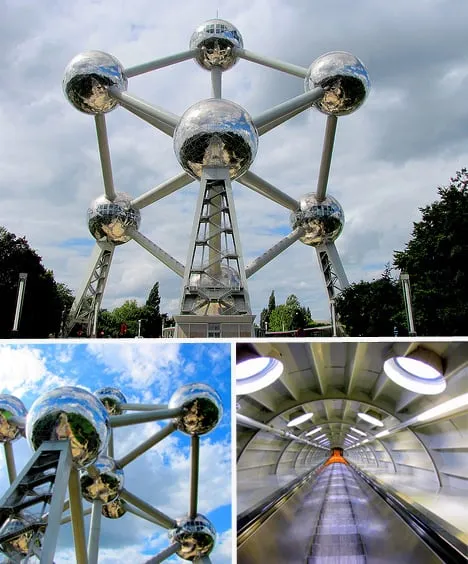
The Atonium, Belgium.
This strange conceptual building is shaped like a representation of the atomic structure of iron. Designed and created for the 1958 World Fair in Brussels, the Atonium is now used for exhibition spaces. There's also a restaurant and a hostel for visiting school groups. Escalators connect the nine steel pods in this strange, retro-futuristic structure.
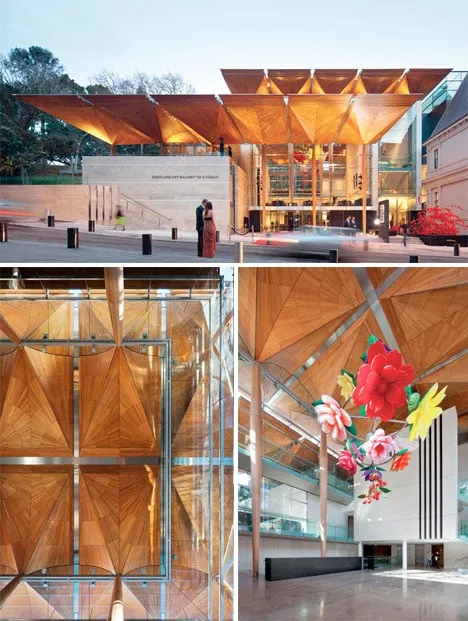
Auckland Art Gallery.
Awarded "Building of the Year" at the World Architecture Festival, the Auckland Art Gallery offers a truly unique experience for art lovers. Wooden tapestries mirroring the trees surrounding the nearby Albert Park flank wide, warm spaces where light and air filter down on contemplating visitors. A perfect respite from the hustle and bustle of the city.
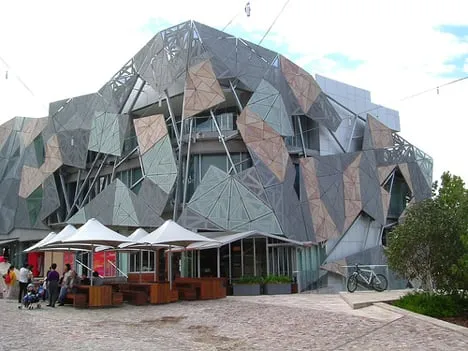
Federation Square, Melbourne, Australia.
The competition brief: Design a new civic precinct in downtown Melbourne. The winner: This geometric jumble of curves and angles that resembles the famous Guggenheim. Covered by geometric "shards", the design drew controversy during its construction when it was revealed one of the "shards" would block the view of the historic cathedral. Taking up 3.2 hectares – an entire city block – Federation Square offers public spaces and space for cultural events and exhibitions.
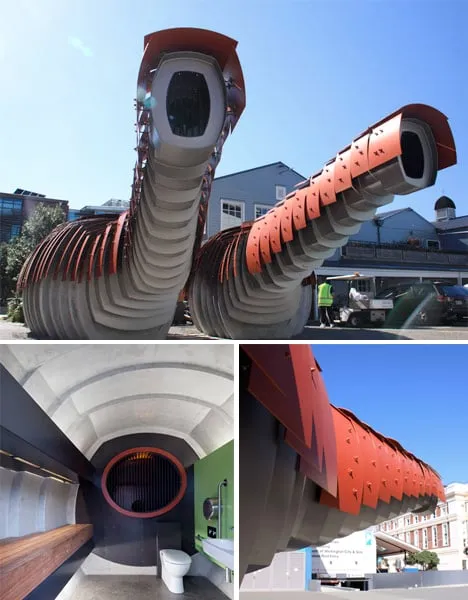
Kumutoto Toilets, Wellington, NZ.
Designed by Studio Pacific, these twin structures aren't the skeletal remains of ancient dinosaurs, but public restrooms. The structural appendages, which were designed to resemble crustaceans in the nearby harbour, are cantilevered – providing natural ventilation and a real sense of science-fiction disbelief. Each base contains one accessible toilet.
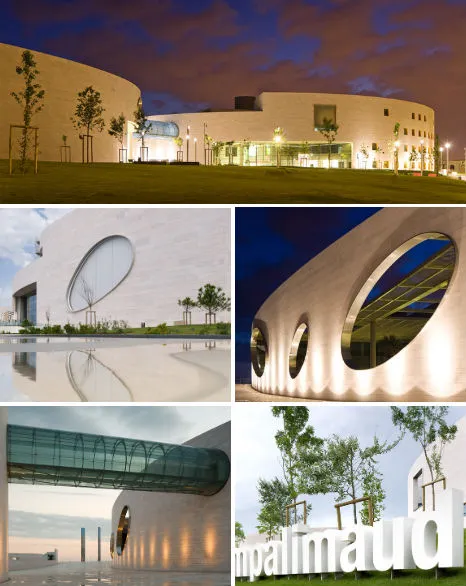
Champalimaud Center, Lisbon, Portugal
Designed by Charles Correa, the Champalimaud Center for the Unknown is a world-renowned diagnostic and research facility. The concept of the space was to create a sculptural statement of contemporary science and medicine – a place where people can learn and heal. Situated by the ocean, the building consists of three distinct units: The first is a theatre, exhibition hall and offices, the second is the laboratories and spaces for doctors and scientists, and the third is a public amphitheatre.
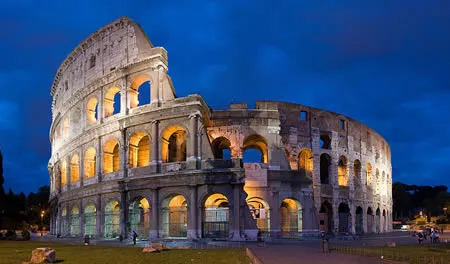
Colosseum, Rome, Italy.
Of course, what discussion of great public buildings would be complete without acknowledging one of the world's most interesting, and barbaric, entertainment theatres? The Colosseum seats up to 50,000 people and was the venue for gladiatorial contests in Ancient Rome. Fallon warriors, slaves, prisoners and political enemies fought with wild beasts, re-enacted famous battles (including ocean battles where the amphitheatre was flooded), duelled to the death or were publically executed. It is estimated more than 500,000 people died during the building's life.
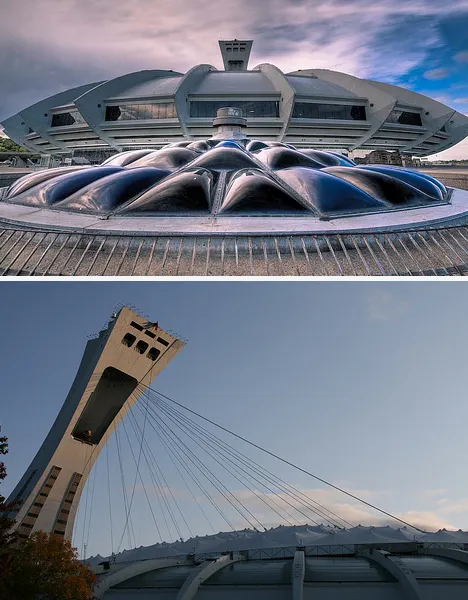
Olympic stadium, Quebec, Canada.
Built for the 1976 Summer Olympics, the Montreal stadium makes a striking impression with it's 575 ft high leaning tower and futuristic "flying saucer" appearance. The stadium is still in use for baseball and football teams.

San Francisco Civic Centre, San Francisco, US.
After a 1906 fire and earthquake devastated the city, a new Civic Center was built in the Beaux Art style. The central focus of the precinct is the beautiful City Hall, which is flanked by other buildings in the same style, including a museum, opera house, library and offices. Sadly, due to vandalism and vagrancy, the city has removed the inner park that ties together the buildings.
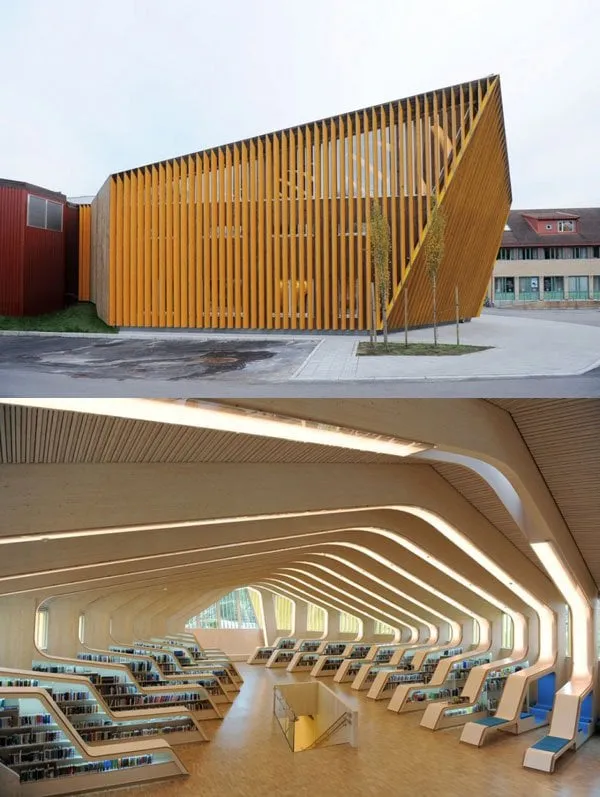
Vennesia Library & Culture House, Vennesia, Norway.
Framed by 27 prefabricated laminated timber ribs, the curves of this building create an almost natural shape. The ribs expand and condense in shape throughout the building, creating both an open vaulted entrance and more intimate rooms. The library has also been designed to maximise energy efficiency, earning it an "A" in the Norwegian energy use system.
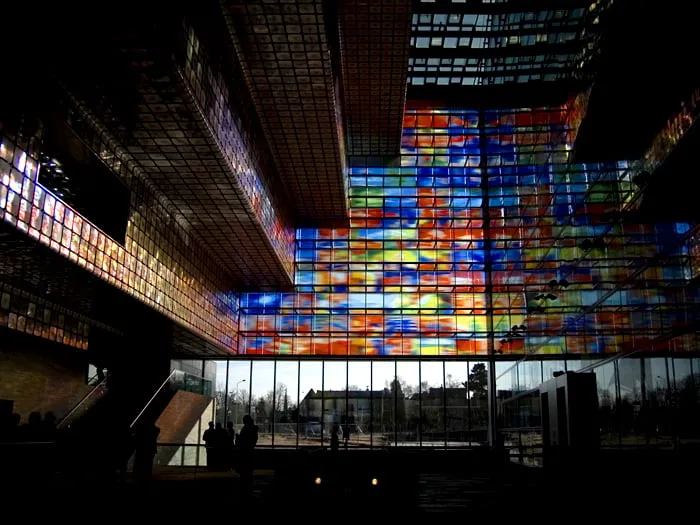
Institute of Light & Sound, Hilversun, Netherlands.
The Institute for Sound & Vision houses three distinct entities: The National Audiovisual Archives, a public TV & Radio exhibition centre, and a professional research institute. The giant cube structure exists half above ground, half underground, where the archives are stored in temperature-controlled rooms. From the entrance, visitors are taken across a bridge where, if they look down, they can see a dramatic example of the depth of the vaults.

New Ballet & Opera House, Oslo, Norway.
Completed in 2007 as a workplace and concert hall for more than 600 employees of the Norwegian Opera & Ballet, the New Norwegian Opera & Ballet hosts up to 300 performances each year. The concept of the Operahouse was to create a "carpet" of horizontal and sloping surfaces, to signify open access of the facilities to all, enveloping the "factory" space where the performances take place.

Experience Music Project, Seattle, Washington, US.
Some might argue that Frank Gehry's monolithic lump of clashing colours, odd textures and architectural faux pas has no place on a list of the world's "Most Beautiful" public buildings. But I disagree. Sure, it's kind of shaped like a haemorrhoid, but it has a real presence about it in the landscape. It stimulates and excites the imagination, and that's a wonderful thing for a museum to do.
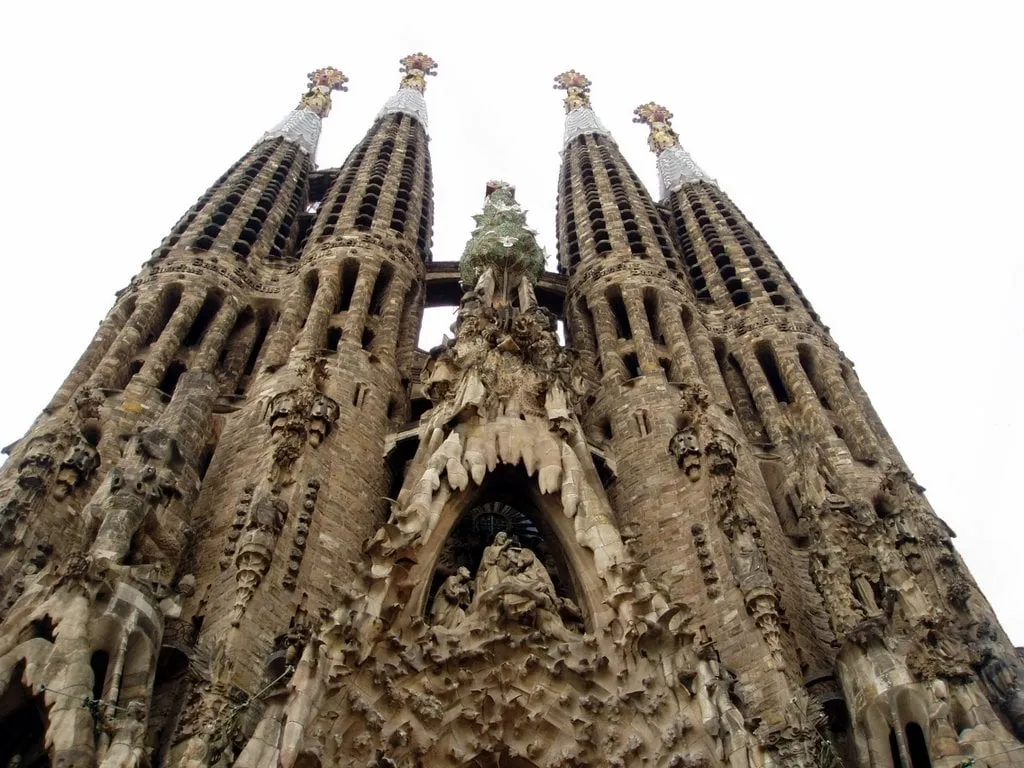
Sagrada Familia, Barcelona, Spain.
Designed by Antoni Guadi in his signature Gothic/Art Nourveau style, the Sagrada Familia is perhaps Spain's most iconic building. Construction began in 1882 and slowed after the death of Gaudi in 1926. Currently, the structure is slightly more than halfway finished, with an estimated completion date of 2026. The Sagrada Familia is now a UNESCO World Heritage Site.
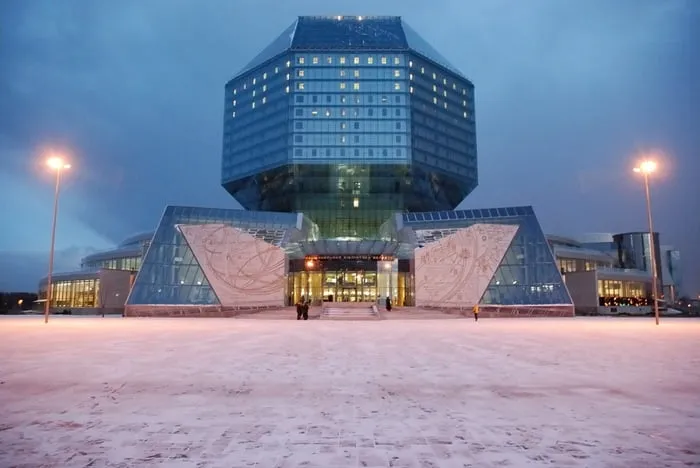
National Library, Belerus, Minsk.
Library, or extra-terrestrial craft? You decide. The building is shaped as a hombicuboctahedron (a fancy word for "diamond") to represent the value of the knowledge stored within. Each side is covered in glass panels, which sparkle in the daylight, and at night, nearly 5,000 colour-changing LED fixtures around the building create a remarkable light display.

Beijing National Stadium, Beijing, China.
Built for the 2008 Olympic Games, the Beijing National Stadium is one of the city's most stunning landmark buildings. It is the world's largest enclosed space, as well as the world's largest steel structure, with more than 26km of unwrapped steel used in it's construction. Called "The Bird's Nest" because of the steel forms enclosing the space, the pattern is actually inspired by Chinese crazed pottery.
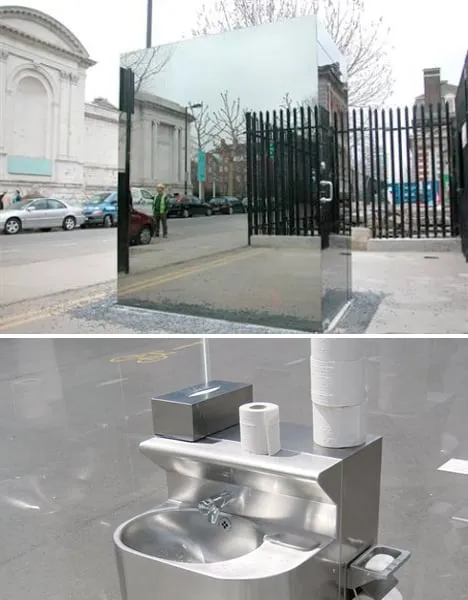
Don't Miss a Sec Bathroom, London, UK.
The second public restroom on our list, this unnerving cube designed by artist Monica Bonvicini features walls of mirrored glass. The cube, which sits outside the Tate Gallery in London, appears camouflaged thanks to the mirrored walls, but once inside, you can behold the whole world from your throne through the glass walls.
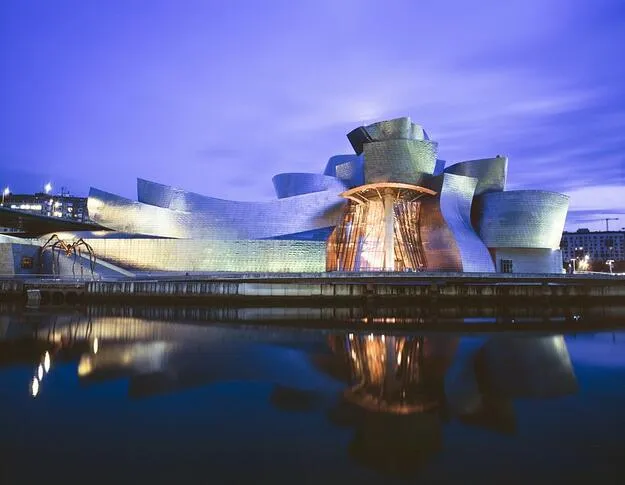
The Guggenheim Museum, Bilbao, Spain.
From the edge of the Nervión river, the Guggenheim Museum is a sight to behold. Swirling structures and organic forms characterise this remarkable design, which not only changed the way the world conceptualised museums, but boosted the economy of Bilbao thanks to the ten million visitors that have graced its halls. Arguably, the museum is architect France Gehry's masterpiece, showing that architecture can change the identity and fortune of an entire city.
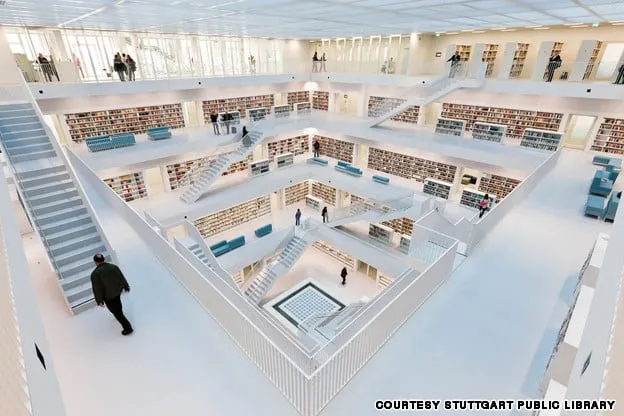
Stuttgart Library, Stuttgart, Germany.
Designed by Korean-born German architect Yi Eun-young, the Stuttgart City Library has suffered some serious controversy in its time. In a city of red-roofs and green spaces, the silver and white building definitely stands out. The innovative, airy design takes it's influence from the Parthenon in Rome, and features a linear multi-storey central space the draws natural light from the roof, flooding the building the light and air.

Lotus temple, Delhi, India.
Open to the public for the purpose of worship and contemplation, this Lotus-shaped house of worship for the Bahá'í faith scooped up numerous architectural awards and remains a popular attraction in Delhi. The temples features many elements important to the houses of worship of the faith – it is a nine-sided circular building, with no altar or statues or other depictions of gods inside. The temple can hold up to 2,500 people.

Justice Building, Manchester, UK.
The headquarters of the Ministry of Justice in the North West of England would be the largest court complex to be built in the UK since the Royal Court of Justice in the 1800s. And it is also one of the most unique. The concept of the large, open, glass spaces was to literally display the accessibility and transparency of the courts and the justice system.

Harpa Concert Hall and Conference Centre, Reykjavik, Iceland.
To rejuvenate the city's sleepy CBD, a huge redevelopment was planned, with the Harpa Concert Hall in the centre of a thriving metropolis of luxury apartments, retail spaces and an enormous hotel. But when the financial crisis hit much of the development was abandoned, and the government helped fund the completion of the concert hall. Made from steel, the structure is covered in geometric glass panels that catch the light, giving the building the appearance of an enormous, multi-faceted jewel.

Red Building, Shanghai, China.
Shaped for a Chinese symbol, the Ren building is a true architectural marvel. One part of the building emerges from the water, and houses a sport centre (including swimming pools and other water activities), and the other rests on the land and is devoted the spiritual enlightenment, and houses a conference centre, libraries and meeting rooms.
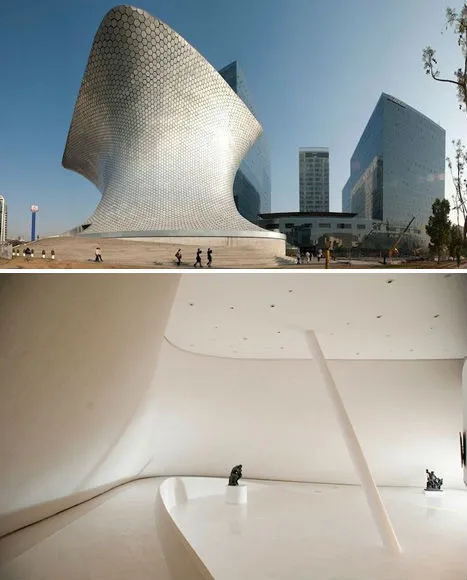
Museo, Sourma, Mexico.
Museo Soumaya not only houses some of the finest artwork in Mexico, it is an artwork in itself. 28 steel columns hold up a windowless façade made from hexagonal aluminium tiles. Light is filtered through the shell, giving the space an otherworldly atmosphere. Standing 150 feet tall, the sculptural museum is a focal point on the city's landscape.
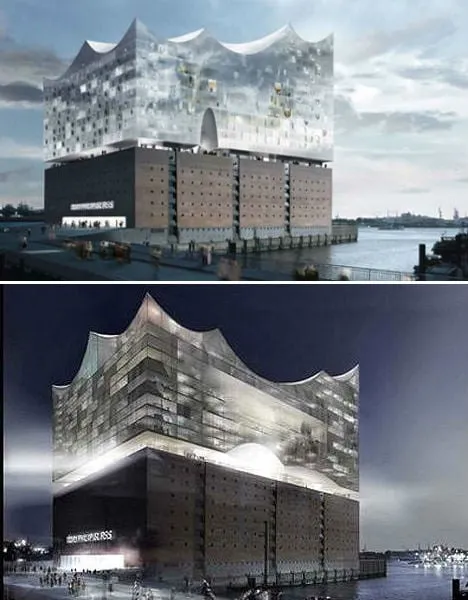
Elbe Philharmonic Hall, Hamburg, Germany.
Architecture firm Herzog & De Meuron are on a mission to bring back a little ornamentation to modern architecture, and the Elbe Philharmonic Hall is a classic example of their vision. Due to be completed this year, the hall resembles a wave on the edge of the river, shimmering in the light of the city. This bold piece of architecture is part of a huge rejuvenation project happening in the city.
What is your favourite example of civic architecture? How do you think public buildings inform and change people's perceptions of their city? Let us know in the comments!