

Product
Featured



TL;DR: Budget overruns in cloud environments can derail projects. WorkflowMAX helps prevent this with real-time budget alerts and integrated financial tracking. By setting thresholds, tagging resources, and automating notifications, teams can detect anomalies early and respond proactively. Features like customisable invoicing, full job management, and Xero integration support accurate forecasting and financial accountability.
Managing costs in cloud environments is crucial. Unexpected expenses can derail your budget if not monitored closely. That's where proactive measures like setting up alerts come in. They help you keep a tight grip on your finances, ensuring you know exactly where your money goes.
Understanding cloud cost management is essential. Businesses often face challenges like unpredictable expenses and fluctuating resource usage. Without proper oversight, budgets can quickly spiral out of control. Alerts offer a solution by enabling real-time monitoring, helping you stay on top of spending.
Integrating financial accountability into your operations is key. It allows you to allocate costs accurately and identify areas of high usage. This clarity ensures your cloud infrastructure runs efficiently, without unnecessary wastage.
Proactive financial monitoring is key. WorkflowMAX’s budget tracking and job financial summary reports enable quick reactions to costs, preventing overruns and ensuring projects stay profitable and within budget through accurate cost allocation.
Cloud cost management hinges on two key principles: accurate cost allocation and transparency. These elements are crucial for keeping your expenses in check and maintaining clarity in your financial operations.
For more insights on optimising asset utilisation, explore ourguide on resource management for successful job execution.
These strategies are fundamental to managing cloud costs effectively. They provide insights into your spending patterns and enable better financial planning. Adopting these approaches allows you to control your cloud expenses and optimise resource utilisation.
Creating budget alerts is essential for keeping your finances in check. Follow these simple steps to set up these alerts using tools like AWS Budget Alerts.
Start by accessing the AWS Management Console. Open the AWS Budgets service and create a new budget. Choose the type: Cost, Usage, or Reservation, and define the budget details. Specify the amount, time period, and the services or accounts you want to monitor.
Setting up Effective Budget Alerts (Step-by-Step)
For additional insights on managing your finances effectively, you might find our 9 tips for creating an effective budget guide helpful.
Integrating these alerts into your workflow enhances financial accountability. By staying informed, you can make quick decisions and optimise resource usage effectively.
Effective cost control in cloud environments requires clear strategies. Tagging is crucial for resource identification. Implement a comprehensive tagging strategy for all resources to easily track costs by project or department.
By implementing these practices, you gain better control over your cloud expenses. They provide a clear path to efficient budgeting and resource utilisation, ensuring you maintain financial stability.
Managing cloud budgets presents several challenges. Establishing accountability is often a hurdle. It's vital to know which teams are responsible for specific expenses. Without clear accountability, costs can spiral. Implementing a system that tracks and allocates costs accurately ensures transparency and control.
Forecasting accuracy is another critical issue. Cloud environments have variable pricing models and fluctuating resource usage, making predictions challenging. Utilising historical data and advanced analytics helps improve forecasting and align budgets with actual usage.
Administrative burdens also weigh heavily on budget management. Manual processes for tracking and analysing expenses are inefficient. Automating these tasks with tools designed for real-time monitoring reduces workload and minimises errors.
Anomaly detection is essential. It identifies unusual spending patterns quickly, allowing for swift corrective action. Setting customisable thresholds tailors alerts to your needs, providing actionable insights into unexpected costs.
Streamlining these processes with effective tools and strategies ensures robust budget management. Businesses can maintain financial stability and optimise cloud resource utilisation by addressing these common obstacles.
Continuous monitoring and adaptation are essential for financial efficiency. Regularly track expenses and adjust your approach to stay in control.
Collaboration across teams is crucial. When IT, finance, and business units work together, everyone benefits. Shared insights improve decision-making and uncover cost-saving opportunities that might otherwise be missed.
Evolving tools and strategies help you address new financial management challenges. Stay informed about the latest advancements to refine processes and maintain competitiveness.
Embracing new technologies and approaches matters. Adopt innovative solutions to streamline operations and optimise resources.
At WorkflowMAX, we're committed to supporting your business. It has features like customisable invoicing and seamless Xero integration, as well as an integration with QuickBooks, which will allow you to sync invoices, payments, and other key financial data seamlessly between platforms.
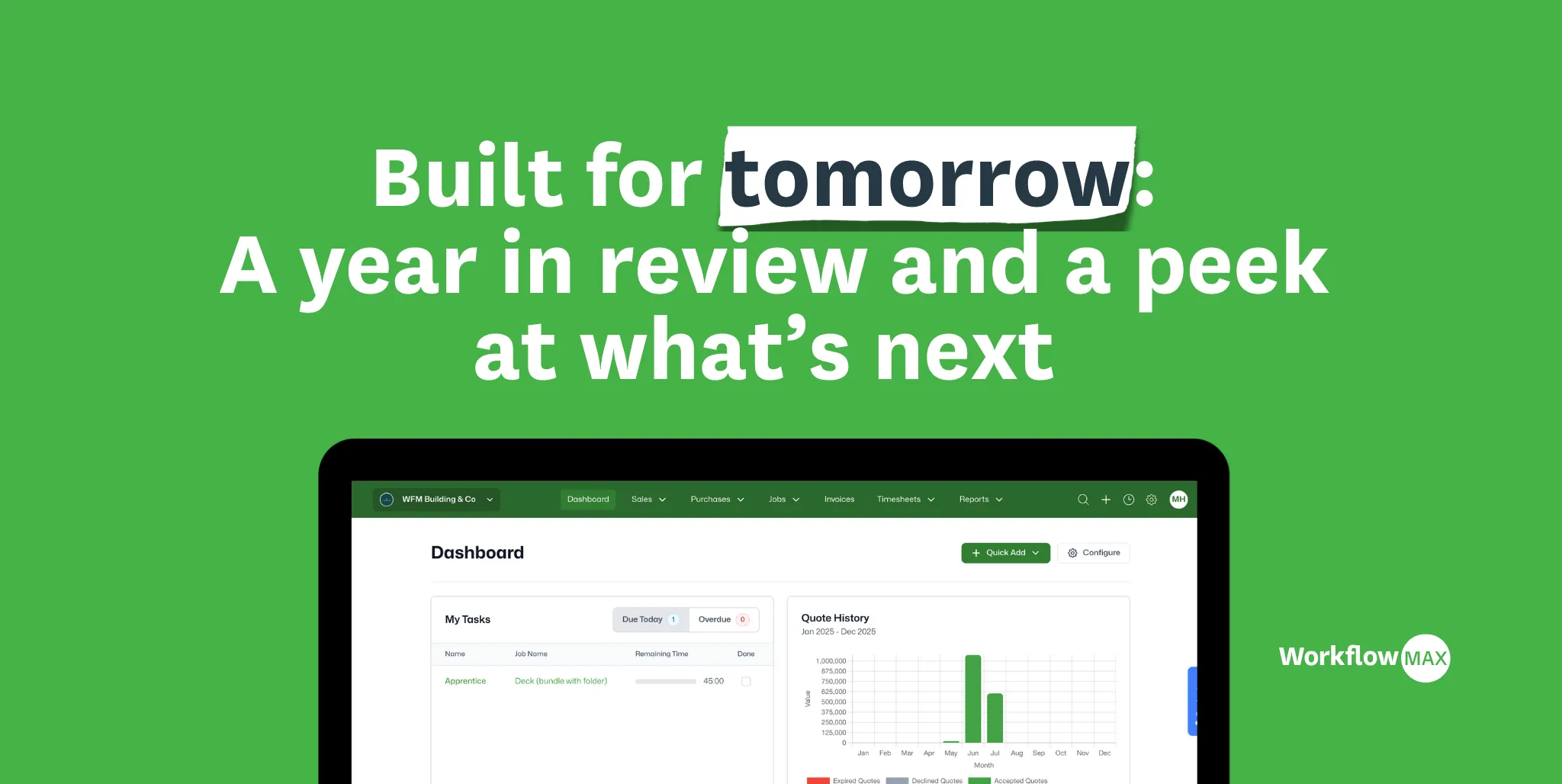
It’s been one of the biggest years yet for WorkflowMAX - full of progress, learning, and continued focus on what matters most: you, our customers.
Every new feature, every improvement, and every decision has been shaped by listening to you and understanding the way you work. It’s your voice, your feedback, and your everyday needs that have steered WorkflowMAX into its most productive, user-focused chapter yet.
Below, you’ll see a snapshot of what’s been delivered over the past twelve months and a look ahead at what’s on the horizon, all designed to help you achieve even more.
In the last year, WorkflowMAX users have unlocked:
All of this is here because you asked for a platform that helps your business work smarter, not harder.
The next six months are packed with meaningful upgrades that respond directly to your feedback and changing needs:
You’ll be the first to know as these features are released, so you can keep making the most of WorkflowMAX, every step of the way.
Every step forward is a direct result of your ideas, your feedback and your ambition to do great work. WorkflowMAX is here for your business, now and for what comes next. If there’s a feature you’re hoping to see or something that would make your day run more smoothly, let us know. This journey is a shared one, and your insights shape the future of WorkflowMAX.
Thank you for being a vital part of this transformation. We’re excited for all that’s ahead and can’t wait to help you achieve even more!
TL;DR: Architectural projects follow distinct phases, each with its own budgetary needs. From schematic design to construction administration, WorkflowMAX helps teams manage costs with precision. It centralises documents, streamlines collaboration, and syncs financial data with tools like Xero. Whether evaluating bids or tracking construction expenses, the platform keeps budgets aligned and stakeholders informed. With real-time dashboards, job management, and document control, WorkflowMAX supports efficient, transparent budget tracking across the entire architectural workflow.
Architectural projects thrive on structure. Each phase guides ideas from start to finish. These phases combine creative and practical elements while meeting technical requirements.
Breaking projects into stages clarifies the process and improves workflow efficiency. Each phase builds on previous work, creating a more organised process. Stakeholders get clear updates on project status and upcoming steps.
Phases streamline work and provide direction. Teams can better anticipate problems and make adjustments to stay on schedule. Following these steps helps teams deliver quality work while balancing all project elements.
Project phases create a collaborative environment where creativity and precision work together. This approach helps turn ideas into reality, with each phase contributing to the final project.
Architectural projects bring together a diverse group of stakeholders, each contributing to the project's success.
Architects typically lead the project and are responsible for the overall design and vision. They work closely with engineers, who focus on structural integrity and technical specifications, ensuring the design is feasible and safe.
Consultants provide specialised expertise, offering guidance on areas like sustainability, acoustics, or lighting. Their expertise helps meet specific goals and regulations.
Contractors handle the hands-on construction work, translating designs into reality. They coordinate various trades, manage on-site activities, and ensure the project stays on schedule and within budget.
Clients are central to the project, providing the vision and requirements. Their feedback and approval are essential at every stage to ensure the project aligns with their needs and expectations.
We support this collaboration with features like centralised document management and seamless Xero integration. These tools improve communication and project management, keeping all stakeholders aligned and informed.
Understanding everyone's role creates better teamwork, helping projects finish successfully.
Schematic design sets the foundation. During this initial stage, the focus is on developing preliminary concepts based on the client's requirements and site analysis.
This phase includes allocating budgets for site analysis and conceptual layouts. You'll need to determine how much to spend on understanding site conditions and creating initial design sketches. Accurate estimates help define your project's scope and direction from the start.
Accurate cost estimation is crucial. It ensures the project stays financially feasible and aligns with the client's expectations. Involving the client in feedback sessions helps refine these estimates and ensures everyone is on the same page.
Tracking these budgets becomes simple with our features, like centralised document management and job costing. It keeps all budget-related information organised and accessible, saving administrative time.
In the schematic design phase, we balance creative ideas with practical budgeting. Precise cost estimates and clear communication create a solid foundation for your project. This helps you spot potential issues early and keeps your project running smoothly.
Design development refines initial concepts into detailed plans. During this phase, budgeting becomes crucial. It's about allocating funds for detailed drawings, selecting materials, and collaborating closely with engineers.
Clear budgets for detailed drawings ensure that every design aspect is accounted for, from structural details to aesthetic finishes. This helps maintain alignment with both the project's technical and aesthetic goals.
Material selection impacts both design and cost. Deciding on materials early helps control expenses and avoid surprises later. It also ensures feasibility, as some materials might require specific construction methods or additional structural support.
Collaboration with engineers is essential. Engineers bring technical insights that ensure the design's feasibility, aligning with safety standards and technical requirements. This partnership helps identify potential challenges before they escalate, saving time and resources. This level of collaboration is especially valuable for architecture practices, as our job management software for architects streamlines project workflows and ensures every detail is managed efficiently.
Managing the moving parts of a project shouldn't feel like guesswork. When you use WorkflowMAX to centralize your job management, you’re essentially creating a live financial pulse for the firm, making it far more intuitive to track shifting costs and protect your margins in real-time.
This is especially critical during design development, where precision and foresight are everything. By anchoring your detailed planning in a single source of truth, you can ensure the project’s creative vision stays perfectly aligned with its financial boundaries.
The construction documents phase is all about precision. Allocating budgets for technical blueprints and regulatory compliance is crucial here. Detailed plans reduce uncertainties during construction.
These documents include everything needed for builders to understand the project. They cover specifications, materials, and compliance with building codes. Allocating resources ensures these documents are thorough, avoiding costly mistakes later.
Investing in detailed blueprints helps keep projects on track. It clarifies what needs to be done and how, minimising delays and miscommunication. Clear plans mean fewer surprises, which saves time and money.
Using WorkflowMAX, you can manage this phase efficiently. Our platform centralises all job-related tasks and documents, making it easy to track progress and adjust budgets as needed. This keeps everyone on the same page and the project moving smoothly.
Allocating resources wisely during this phase ensures a strong foundation for construction. It supports clear communication and efficient execution, leading to successful project outcomes.
is crucial. This stage involves comparing contractor proposals to ensure alignment with your budget. It's about finding the best value, not just the lowest price.
Negotiation plays a key role here. Use it to clarify terms, adjust project scope if necessary, and secure the best deal without compromising quality. Effective negotiation ensures all parties have a clear understanding of responsibilities and deliverables.
Our centralised document management feature helps keep all bidding documents organised. This makes it easy to access and compare proposals, ensuring a smooth decision-making process.
By focusing on a thorough evaluation and effective negotiation, you select a contractor offering value and quality, keeping your project on track and within budget.
Effective expense tracking during construction administration is less about simple bookkeeping and more about maintaining a live financial pulse. Because this phase is where the planned budget meets the reality of the site, constant oversight is essential to catch financial deviations before they escalate.
By leveraging WorkflowMAX as your central job management hub, you move away from fragmented spreadsheets and into a 'single source of truth.' Using centralized document management and real-time performance dashboards allows you to monitor every expense, from materials to labor, against your original targets. This visibility is what powers successful collaboration; when you engage with contractors and stakeholders, you aren't just guessing, you’re working from high-integrity data.
Of course, construction is rarely predictable. When unexpected costs inevitably arise, the ability to pivot is what separates a profitable project from a loss. By using powerful reporting tools to analyze the immediate impact of a change, you can make the informed, adaptable decisions necessary to keep the project within its financial boundaries and ensure a successful completion.
Architectural projects demand precise budget tracking. Project management tools offer a streamlined approach to managing costs across all phases.
Using these features, teams can enhance budget management, ensuring projects run smoothly. By leveraging these tools, architectural firms can efficiently track budgets and improve overall project efficiency. Let’s try this out here!
TL;DR: AI transforms project management by improving accuracy, reducing delays, and streamlining workflows. With WorkflowMAX, you can predict project timelines and budgets using machine learning and historical data. AI highlights risks early, automates updates, and optimises resource allocation, leading to better planning and fewer disruptions. Real-time collaboration and intuitive status reporting improve efficiency and outcomes. Implementing AI within WorkflowMAX enables more thoughtful decision-making, seamless communication, and scalable project success.
Managing modern projects isn't easy. Increased complexity, communication barriers, and manual inefficiencies are common hurdles. These challenges often lead to delays, budget overruns, and compromised outcomes.
As projects grow in size and scope, keeping everyone on the same page becomes tough. Miscommunication can derail timelines and increase costs. Manual processes slow things down, creating room for errors that impact project success.
Project managers need a clear overview of timelines and resources. Without it, managing tasks and deliverables becomes a guessing game. The lack of real-time insights further complicates decision-making, making it harder to adapt to changes.
AI emerges as a powerful ally. By providing data-driven insights and automating routine tasks, AI helps overcome these challenges. It offers predictive capabilities for timelines and budgets, paving the way for more efficient project management.
Embracing AI means fewer surprises and more control over project trajectories. It's not just about keeping projects on track; it's about enhancing overall efficiency and achieving better outcomes.
AI is reshaping project management. It's an innovative, practical technology that brings efficiency and clarity to projects. Automating routine tasks frees up your day for strategic thinking.
Predictive analytics improves project management. With AI, you get insights into timelines and budgets that are more accurate than manual predictions. This helps you anticipate outcomes, make informed decisions and avoid costly surprises.
Resource allocation improves with AI. It analyses data and suggests the best use of available resources. This means projects run smoothly, team members are used effectively, and timelines are met without stress.
AI fits perfectly with our WorkflowMAX project management approach. Our platform integrates AI features that streamline processes, improve decision-making, and ensure resources are used efficiently.
AI is transforming project timelines. By analysing historical data and recognising patterns, AI accurately predicts project timelines. This means less guesswork and more certainty in planning.
Machine learning algorithms play a key role. They assess past project data, identify trends, and consider real-time variables. This dynamic analysis helps forecast completion dates more reliably.
Timeline risks are a significant concern for project managers. AI helps mitigate these risks by highlighting potential delays before they happen. With real-time insights, adjustments can be made swiftly to stay on track.
Our platform integrates AI to provide clear, actionable insights into project timelines. This ensures project managers can plan with confidence and adapt to changes seamlessly.
Real-time variables can often disrupt project plans. AI factors in these variables, offering predictions that adjust as conditions change. This flexibility is crucial in maintaining project momentum.
With AI, project managers have a powerful tool for meeting timelines. It’s about precision, efficiency, and staying ahead of potential disruptions. This is the future of project management with WorkflowMAX, where AI-driven insights lead to better project outcomes.
AI transforms team collaboration. Automating updates, integrating real-time document sharing, and offering centralised platforms for status reporting are just a few ways it helps.
WorkflowMAX uses AI to facilitate several tasks Our platform integrates tools that streamline communication and document management. This boosts efficiency and keeps projects moving smoothly, regardless of your team's location.
AI-driven collaboration means more efficient teamwork, fewer errors, and a seamless project experience. It supports a dynamic work environment where communication flows effortlessly, ensuring that project goals are met with ease.
AI identifies risks early through data analysis and pattern recognition, spotting issues before they become problems. This helps project managers tackle head-on delays, budget overruns, and resource shortages.
When risks appear, AI suggests mitigation strategies. It analyses the situation and provides insights that help teams plan and implement solutions fast. This minimises the impact of surprises on project timelines and budgets.
AI excels at scenario analysis, too. Teams can explore different contingencies and prepare for various outcomes. This planning gives project managers the confidence to handle uncertainties.
By adding AI to your risk management, you keep projects on track. Stay informed, prepared, and in control for more successful outcomes.
Implementing AI in project management can be tricky. Resistance to change is often the first hurdle. Teams might hesitate to adopt new tools, fearing they'll disrupt established workflows. Clear communication about AI's benefits and training sessions can ease this transition and build confidence. Our guide on ensuring operational continuity during team transitions offers insights on planning and structured communication that can help smooth the way.
Data quality is crucial. AI thrives on accurate data, so organisations need to ensure their data is clean and standardised. This might require an initial investment in data management processes, but it's essential for practical AI analysis.
Integration complexity is another challenge. AI tools must blend seamlessly with existing systems to avoid disruptions.
Starting with pilot projects is a smart move. This allows teams to see AI in action, assess its impact, and make necessary adjustments. It’s about learning and adapting without overwhelming the entire organisation.
AI is reshaping how projects are managed. It offers a blend of technology and human insight, empowering teams to focus on strategic and creative tasks. Our WorkflowMAX platform harnesses AI to streamline processes and enhance decision-making.
AI provides data-driven insights that make project timelines and budgets more predictable. Analysing data helps managers make informed decisions and anticipate challenges. This means less time spent on manual tasks and more on strategic planning.
With AI, managing resources becomes more efficient. It optimises allocation, ensuring projects are completed on time and within budget. Teams can collaborate better, with AI handling routine updates and document sharing.
AI's role in project management is all about enhancing efficiency and outcomes. It allows teams to work smarter, not harder. As AI continues to evolve, it will further empower businesses to achieve their goals precisely and confidently. With WorkflowMAX, you can embrace this future and maximise your project management potential.
TL;DR: Resource utilisation heatmaps are powerful tools for visualising how team capacity is used across projects. WorkflowMAX functions as the core job management hub, centralizing the labor and project data you need to fuel these heatmaps. . Customisable capabilities, filters, and real-time updates make it easy to spot imbalances and adjust workloads. Heatmaps also support capacity forecasting, improve communication with stakeholders, and streamline task distribution. Whether in creative agencies, architecture firms, or service-based teams, heatmaps drive smarter planning and stronger performance.
Good capacity planning keeps projects on track and helps teams perform well. Businesses struggle to pinpoint overallocated and underallocated resources, which leads to delays and inefficiencies. Without seeing the whole picture, you'll miss where your resources aren't balanced.
When resources are overburdened, team members risk burnout, affecting project timelines and team morale. Conversely, underutilised resources mean missed opportunities to maximise productivity and profit.
Resource heatmaps show these issues visually, making them easier to spot. They provide clarity and transparency, allowing managers to adjust allocations quickly. This helps your team work effectively without burning out.
Understanding exactly how your resources are deployed is the key to maintaining a high-efficiency firm. By using WorkflowMAX to centralize your job management, you create the accurate data foundation required to power detailed resource heatmaps. This visibility allows you to monitor allocation in real-time, staying flexible enough to intercept bottlenecks before they become problems, keeping both your projects on track and your team fully engaged.
Resource utilisation heatmaps are effective visual tools that show how resources are allocated across projects and timeframes. They use colour coding to indicate different levels of utilisation. Warmer colours like red highlight higher usage, while cooler colours like blue show lower usage.
These heatmaps provide a clear view of resource distribution. Managers can spot imbalances and make informed decisions. They show where resources are over or underutilised, enabling quick adjustments.
Resource heatmaps also enhance communication. They make resource standings clear to all stakeholders. This visibility drives better decisions and planning, keeping teams aligned.
Customisable resource heatmaps are essential for effective capacity planning. They let you adjust units, configure thresholds, and filter data by roles, teams, or departments. This flexibility ensures the heatmaps align perfectly with your organisation's needs.
These features enable organisations to gain better insights into their resource management. Customising heatmaps to fit your needs allows you to streamline capacity planning, enhance efficiency, and maintain balanced workloads. This ensures your team remains productive and projects stay on track.
Resource heatmaps offer significant advantages in managing resources effectively. They provide a clear view of resource allocation, making it easy to see how resources are distributed across projects. This visibility helps managers make informed decisions quickly.
Enhanced decision-making is another key benefit. With heatmaps, managers can assess where adjustments are needed, ensuring resources are used efficiently. This proactive approach helps maintain balanced workloads, preventing team burnout.
Balanced workloads are crucial for maintaining team morale and productivity. By using heatmaps, managers can spot when team members are overburdened and take steps to redistribute tasks. This ensures a healthier work environment and keeps projects moving smoothly.
Forecasting resource needs becomes more accurate with heatmaps. They allow managers to anticipate future demands and plan accordingly. This foresight is essential for meeting project deadlines and staying within budget.
Resource heatmaps are practical tools for capacity planning.
Imagine a creative agency juggling multiple projects. With heatmaps, they can see if designers are overloaded while copywriters have slack. This visibility helps redistribute tasks, ensuring balanced workloads and preventing burnout.
Bottlenecks are common in project management. Heatmaps make it easy to identify these by showing areas where resources are stretched too thin. This allows for proactive solutions, like reallocating team members or adjusting project deadlines.
Heatmaps are invaluable in architecture firms, where projects often demand precise timing and resource allocation. They help track which stages are moving smoothly and where delays might happen, enabling better planning and execution.
Heatmaps also support forecasting. By analysing past and current resource trends, organisations can predict future needs. This foresight aids in planning for new projects and ensures teams are prepared.
Resource utilisation heatmaps significantly improve organisational efficiency, team well-being, and financial outcomes. They show exactly how resources are used, highlighting areas that need adjustments. This forward-thinking approach leads to better decisions.
With these heatmaps, you assign resources more effectively. They reveal bottlenecks and help distribute tasks evenly. This boosts productivity and keeps team morale high by preventing burnout.
TL;DR: Post-project evaluations and lessons learned help teams identify what worked, what didn’t, and how to improve. By gathering feedback, analysing outcomes, and documenting insights, organisations create a culture of continuous improvement. WorkflowMAX supports this with tools like full job management, centralised document management, and reporting features. We also offer KPI performance tracking and reporting. These tools help teams avoid repeating mistakes, enhance communication, manage risks, and maintain quality standards across projects. Capturing lessons learned strengthens project planning, improves outcomes, and fosters long-term success.
Post-project evaluation is crucial in project management. It helps you understand what went well, what didn’t, and what could be improved. Examining a project after its completion gives you valuable insights into successes and challenges.
Evaluating projects allows you to pinpoint areas for improvement. This isn't just about identifying what's broken but enhancing future projects. By learning from each project, you can refine processes and boost outcomes.
This process involves gathering feedback from all team members. Their insights provide a fuller picture of the project’s performance. It's about fostering a culture of continuous improvement, where every project becomes an opportunity for growth.
Recording lessons learned helps projects succeed. It prevents repeat mistakes, saving time and resources. When you document these insights, you optimise processes and boost efficiency in future projects.
Lessons learned build team collaboration. By sharing experiences, teams develop a clearer understanding of what works. This shared knowledge strengthens teamwork and improves results.
You grow continuously through this practice. Analysing past projects reveals areas for improvement, helping yourorganisation development and guaranteeing each project adds to your overall success.
Project managers rely on documented lessons. These insights guide decision-making, improve planning, and create better project scopes and timelines. This helps you meet client expectations and deliver superior results.
We provide tools that make this process simple. Features like comprehensive reporting clearly show your productivity and performance. This helps you refine workflows and increase revenue.
Centralised document management gives everyone easy access to project information. This creates a learning environment where everyone improves together. Recording what you learn builds a stronger, more successful business.
A solid post-project evaluation starts with a deep dive into the data, using surveys and team debriefs to capture the diverse perspectives that reveal what truly happened on the ground. Once those insights are gathered, the focus shifts to analysis—identifying the patterns and trends that differentiate a one-off win from a repeatable strength.
From there, documenting these 'lessons learned' in a structured report becomes essential. By using a standardized template to capture the context and impact of every experience, you ensure these insights are accessible and ready to be put into practice as the project evolves
Store the documented lessons in a centralised location. This ensures everyone can easily find and use them for future projects. It creates an ongoing learning environment.
Share the insights with your team and stakeholders. Open discussions about these findings foster a culture of transparency and improvement. It encourages collaboration and continuous development.
These steps ensure that actionable insights are captured and used effectively. They help refine processes, enhance outcomes, and improve overall business success.
Learning from past projects pays off. It improves outcomes by showing what works and what doesn't. Leveraging historical data from completed projects can offer precise benchmarks for future work. You can build better strategies by using these insights in future projects, making your planning and execution more effective.
Your team improves, too. Sharing documented lessons creates a learning culture that lifts everyone's performance. The collective knowledge makes your team more adaptable and skilled at handling challenges.
Clients notice when you apply past lessons. Projects run more smoothly, and you meet expectations consistently.
Organisation makes lessons stick. When insights are easy to find and use, you can apply them to new projects right away. Developing a well-documented system helps standardise your job management processes.
This approach helps you learn from experience. It improves your project management and helps your business grow.
Capturing and storing lessons learned is vital for ongoing improvement. Start by using surveys: These gather feedback from team members and stakeholders, providing diverse insights. They’re simple but effective for understanding project successes and challenges.
Implement centralised repositories: Store all lessons in a single, accessible location. This could be a shared drive or a knowledge-sharing platform. It ensures everyone can find and use past insights easily.
Use standardised templates: Consistent documentation helps organise information efficiently. Templates should include sections for project details, key successes, challenges, and actionable recommendations. This structure makes retrieval straightforward.
Consider knowledge-sharing platforms: Tools like WorkflowMAX support centralised document management. This feature enhances team collaboration and ensures lessons are never lost. Everyone stays connected and informed.
Regularly review and update your repository: Keep the information current and relevant. Schedule periodic reviews to ensure lessons apply to new projects. This keeps your learning process dynamic and beneficial.
Adopting these methods creates a sustainable system for learning from every project. It fosters a culture of continuous improvement, making your team more adaptable and skilled at tackling future challenges.
revolve around key areas like communication, risk management, and quality control. These elements significantly impact project success.
These lessons contribute to improved project outcomes. They optimise processes, enhance collaboration, and ensure projects are completed successfully. By focusing on these areas, teams can learn from experience and apply insights to future projects, driving continuous improvement.
Integrating post-project evaluations builds a culture of continuous improvement. Your team learns from each project, which leads to better results over time.
Regular project evaluations reveal what works and what doesn't. This knowledge helps you prevent mistakes and motivates team members to improve workflows.
Open discussions create transparency. Your team feels empowered to share their insights, bringing everyone into the improvement process. This teamwork enhances problem-solving and helps your organisation evolve.
Documenting lessons and making them accessible reinforces this culture. Our centralised document management guarantees knowledge stays preserved. It gives teams a reliable reference for future projects.
TL;DR: Compliance is essential to protect your organisation from legal risks and reputational damage. WorkflowMAX helps manage risk and compliance with customisable checklists, automated workflows, and real-time tracking. Identify and mitigate risks, update policies, and train your team effectively. With features like document centralisation and cross-department collaboration, WorkflowMAX ensures your operations align with evolving regulations. A strong compliance framework fosters trust, boosts efficiency, and keeps your business audit-ready at all times.
Compliance matters to every organisation. It means following laws and standards in everything you do. Non-compliance can lead to hefty financial penalties and damage your reputation.
Regulatory standards constantly evolve. Businesses must stay updated with the latest requirements. Technology adds complexity, introducing new risks that need effective management.
Compliance protects your organisation's integrity and builds trust, it's not just about checking boxes. Robust compliance frameworks help identify, assess, and mitigate risks.
Organisations need a solid risk plan. This means using technology and building a compliance culture. Regular training and clear communication keep everyone aligned.
Teams must collaborate. Legal, HR, finance, and operations need to work together seamlessly. Documenting and reporting compliance activities creates a strong defence against potential risks.
Adding these elements to your job roles strengthens your organisation. Following laws and standards helps avoid legal penalties and financial losses. This makes compliance essential to your business strategy.
Compliance management systems are essential for keeping your business on track. Policies and procedures: These set clear standards and expectations for everyone in the organisation. They guide behaviour and make sure everyone knows what's required.
Risk identification and mitigation: Spotting potential risks early is crucial. A solid system helps you identify these risks and implement strategies to reduce them. This proactive approach protects your organisation from unforeseen issues.
Integration of compliance management software: Using tools like WorkflowMAX can streamline compliance processes. Our software not only automates tasks, reducing manual effort and increasing efficiency, but also introduces MFA, mandatory custom fields, and custom reports, helping you have everything up-to-date and accurate.
Compliance systems are vital in ensuring adherence to legal and regulatory requirements. They ensure your organisation is aligned with current laws, reducing the risk of penalties or legal issues. Implementing robust security measures, as detailed in our Security Policy - WorkflowMAX, can further strengthen your compliance framework.
With these components in place, your business can operate smoothly and confidently. It’s about creating a culture where compliance is second nature. This safeguards your organisation and builds trust with clients and stakeholders.
Keeping compliance systems robust and current is key to your organisation's success and integrity.
Managing compliance checklists effectively involves a structured approach tailored to your organisation's needs. Here's how to do it:
Tailor each step to fit your organisation's unique needs and job roles. This ensures that compliance measures are practical and effective. Regular updates and communication keep everyone aligned with the latest standards and practices. Establishing structured processes reinforces your compliance framework but also aids in ensuring smooth transitions for your teams, as explained in our article on keeping operations smooth when teams move to the next stage. By following these steps, you create a robust compliance framework that protects your organisation and enhances its integrity. Regularly review and adjust your strategies to stay ahead of regulatory changes and maintain compliance.
Organisations face several hurdles in maintaining compliance. Evolving regulations require constant attention. Laws and standards change, and staying updated is crucial. Missing updates can lead to penalties.
Resource constraints are another challenge. Limited budgets and personnel make it hard to keep up with compliance demands. It’s essential to allocate resources wisely and prioritise key compliance areas.
Staff awareness is vital. Employees need to understand compliance requirements. Regular training sessions help keep everyone informed and aligned with current standards.
To tackle these challenges, preparation is key. Develop a strong compliance culture. Encourage open communication and ensure everyone knows their role in maintaining compliance.
Use technology to streamline processes. Tools like WorkflowMAX can automate tasks, reduce manual errors, and increase efficiency. For organisations navigating changing regulatory landscapes, exploringintegrated cloud solutions for MTD compliance can shed light on automating tax processes and streamlining reporting.
Adaptability is essential. Be ready to adjust strategies as regulations change. Regularly review compliance measures and make necessary updates. This proactive approach helps organisations stay compliant and avoid potential risks.
Proactive compliance management offers significant advantages. It reduces risks by identifying potential issues before they escalate. This makes your organisation more transparent, ensuring everyone knows what's expected and why it matters.
Good compliance practices improve how your organisation performs. Clear policies and regular training equip your team to handle compliance requirements confidently. This contributes to a positive workplace culture where everyone understands their role in maintaining standards.
Managing compliance well makes your operations more efficient. Integrating technology like our WorkflowMAX solution allows you to streamline processes, automate tasks, and reduce manual errors. This saves time and lets your team concentrate on what matters. Standardising your job management processes, as detailed in our article on 5 reasons to standardise your job management processes, can further enhance compliance and operational efficiency.
Being transparent and communicating clearly builds trust in your company. Employees feel empowered when they know the rules and see them applied consistently. This creates a culture of accountability and integrity.
Maintaining compliance is all about staying proactive. Use technology to streamline processes. Our WorkflowMAX solution simplifies compliance tasks, making them efficient and error-free. This reduces manual workload and ensures accuracy.
Create a culture of compliance throughout your organisation. Regular training sessions keep everyone informed about the latest regulations. Encourage open communication so employees feel comfortable discussing compliance concerns.
Update policies regularly. Laws change, and your policies should reflect those updates. Keep them accessible and ensure everyone knows where to find them. This helps maintain alignment with current standards.
Implement continuous monitoring systems. Regular audits and assessments help identify gaps and areas for improvement. This ongoing vigilance protects your organisation from potential risks and ensures sustained compliance.
Foster collaboration across departments. Legal, HR, finance, and operations should work together seamlessly. This unified approach strengthens compliance efforts and ensures nothing slips through the cracks.
TL;DR: Effective client communication is crucial for maintaining project momentum and fostering trust. WorkflowMAX helps project managers deliver clarity through customisable reports and shared dashboards. These tools provide clients with real-time visibility into project timelines, budgets, and performance. Instead of relying on scattered emails or separate portals, WorkflowMAX streamlines updates by consolidating project data in one powerful reporting system. The result? Stronger relationships, faster decision-making, and fewer surprises.
Successful project outcomes depend on transparency and collaboration. When clients are informed, decisions are made more quickly, misunderstandings are minimised, and trust is maintained.
WorkflowMAX offers a practical solution: shareable reports and custom dashboards that ensure clients stay informed, without the need for a separate portal.
From progress tracking to budget visibility, you can deliver tailored updates that meet your clients’ specific needs, keeping them aligned and confident throughout the project lifecycle.
WorkflowMAX lets you generate and share reports that reflect real-time project data. Whether it’s tracking job milestones, resource allocation, or financials, the platform puts the right information at your fingertips — and your client’s.
Key features include:
These reports can be exported or shared during review calls, providing clients with the clarity they need without the need for back-and-forth email chains.
Clients value transparency. With WorkflowMAX’s reporting tools, you can provide:
These tools help reduce misunderstandings and enable clients to feel in control of their investments. Instead of wondering where things stand, clients receive updates that show progress and build confidence.
Rather than introducing yet another platform for client access, WorkflowMAX keeps everything in one place. Teams focus on delivering quality work, while clients receive scheduled updates or on-demand reports that answer their questions before they’re asked.
This approach reduces:
As an added benefit, teams stay focused on priorities, not paperwork.
Financial clarity is at the heart of strong client relationships. With WorkflowMAX, you can:
Sharing this data keeps billing clear and disputes minimal, helping your team maintain a reputation for professionalism and accuracy.
WorkflowMAX empowers project teams to deliver client transparency, not by adding another tool, but by leveraging the platform’s robust reporting capabilities. Whether it’s status updates, job costs, or timeline overviews, the right insights are easily generated and shared.
TL;DR: Project template libraries streamline workflows by standardising recurring tasks and ensuring team consistency. These templates save time, reduce errors, and improve collaboration by offering structured guidance from start to finish. WorkflowMAX lets you customise templates using no-code tools, making them adaptable to your project and team needs. With centralised document management and clearly defined roles, your team stays aligned and productive. Template libraries also support continuous improvement, helping teams optimise processes and scale efficiently over time.
Project template libraries improve workflow efficiency. They structure project management, ensure consistency, and reduce errors. They guide your team through each step with a solid foundation.
These libraries boost team collaboration with clear guidelines and expectations. They act as blueprints that keep everyone aligned. This leads to better communication and fewer misunderstandings.
Structured templates save time. They eliminate repetitive setup work so your team can focus on delivering quality results. New team members learn quickly with these standardised processes.
Our customisable capabilities adapt to your specific needs. This flexibility ensures your workflows remain efficient and aligned with your business goals.
Repeatable workflows bring clarity and efficiency to project management. They save time by standardising tasks, allowing your team to focus on delivering quality work. With transparent processes in place, there’s less room for error and more consistency in results.
Examples of streamlined workflows include using templates for recurring tasks or automating handovers between project stages. These systems ensure consistent output and smooth operations.
By incorporating repeatable workflows, your project management becomes more efficient and reliable. Teams can anticipate challenges and adapt quickly, leading to successful project outcomes.
Customising workflow templates is all about matching processes to your project's needs. Our no-code tools let you tweak templates without any tech hassle. You can define task sequences, set roles, and create decision points that fit your team’s workflow. We also have job templates and custom print templates (e.g. POs, invoices).
Flexibility is key. Customisation allows you to adjust workflows for different projects and teams. This adaptability guarantees that processes remain effective and aligned with your business objectives.
Our platform integrates these features seamlessly. By using WorkflowMAX, you can personalise workflows, enhance collaboration, and ensure efficient project execution. This streamlined approach helps your team deliver high-quality results efficiently.
Structured templates are key to seamless teamwork. They provide clear guidelines, reducing the need for reverse engineering. Everyone knows what to do without guesswork, streamlining the process from start to finish.
These templates enhance communication among team members. With defined roles and tasks, everyone stays on the same page. This clarity reduces misunderstandings and keeps projects moving smoothly.
Task management becomes more efficient with templates. They outline each step, ensuring nothing is overlooked. Teams can focus on delivering quality work, knowing all tasks are accounted for.
Centralised document management on WorkflowMAX ensures easy access to all necessary documents, enhancing collaboration. Using structured templates lets your team work together more effectively, boosting overall productivity.
Template libraries enable ongoing improvement and advanced strategies. These libraries provide a foundation for refining processes and integrating new management techniques.
Template libraries structure workflows, making it easier to adapt and optimise as your business evolves. They improve efficiency by minimising repetitive tasks and streamlining operations. By setting clear guidelines, they support better decision-making and reduce errors.
Collaboration thrives with template libraries. They ensure everyone works from the same information, creating a more cohesive team environment. With centralised document management, accessing and sharing information becomes seamless, boosting productivity.
TL;DR: Effective project planning starts with clarity. WorkflowMAX allows you to design schedules that reflect real-world project stages and task flow. While WorkflowMAX doesn’t automate task dependencies, its timeline visualisation tools help teams map out project phases, identify bottlenecks early, and stay on track. From architecture to creative agencies, visual planning means fewer surprises and more control.
Project success often depends on how well teams can see the work ahead. When deadlines, responsibilities, and milestones are scattered across different tools or spreadsheets, delays and confusion are almost inevitable. There are several job management best practices to follow in this situation.
A clear visual timeline helps architect teams:
This is where WorkflowMAX comes in.
A Gantt chart is a horizontal bar chart that shows the duration of tasks across a project timeline. It gives you a bird’s-eye view of:
While many project management tools offer advanced dependency features, WorkflowMAX takes a design-first approach. You build the timeline that works for your project, placing tasks in the order they need to occur. The visual timeline provides clarity without adding complexity.
WorkflowMAX provides a suite of tools designed to streamline project planning, including:
While WorkflowMAX doesn’t support automatic linking between dependent tasks, its flexible interface lets you design and adjust project sequences manually. This approach gives teams complete control over the project timeline without being bound by rigid logic rules.
From conceptual design to council approval to construction, architecture workflows are inherently sequential. With WorkflowMAX, firms can build project timelines that reflect these real-world stages. Each task block on the chart becomes a visual checkpoint, helping teams and clients stay aligned.
Creative projects often require coordination among multiple departments, including design, copy, strategy, and client review. WorkflowMAX’s timeline tools let agencies map these handovers clearly. Everyone knows what’s happening when, reducing revisions and last-minute stress.
In project management theory, the critical path is the sequence of tasks that determines the shortest possible project duration. While WorkflowMAX doesn’t calculate this automatically, you can apply the principle manually.
Ask yourself:
By manually placing these tasks first and mapping others around them, you can design your version of the critical path using WorkflowMAX’s visual timelines.
WorkflowMAX offers a visual-first approach to planning and management. It’s built for teams who want flexibility, not rigid frameworks. By using custom dashboards, you can create project timelines that reflect your unique workflow, whether you’re managing blueprints or brand campaigns.
TL;DR: Automated project status reporting keeps everyone informed with clear, concise updates on progress, risks, and finances. It saves time, reduces errors, and improves decision-making by providing real-time data and customizable reports for stakeholders and teams. Tools like WorkflowMAX facilitate this process with seamless integration and visual dashboards, ensuring alignment and proactive risk management.
Project status reporting is all about keeping everyone on the same page. It provides a clear summary of how a project is progressing in relation to its planned objectives. This isn't just about ticking boxes; it’s about centralising communication and making sure everyone is involved, team members, stakeholders, and managers, a high-level overview of where things stand.
Imagine having a snapshot that tells you exactly what’s going on. That’s what a project status report does. It aligns the team by recording project history, tracking progress, and highlighting any risks or changes. This way, everyone knows what’s been achieved and what still needs attention.
For stakeholders, it serves as a vital tool to keep them informed without overwhelming them with details. They get a concise view of the project's status, knowing precisely how resources are being used and timelines are being met. It’s a straightforward way to maintain transparency and trust.
By summarising the essentials, project status reporting ensures everyone is aligned, informed, and ready to tackle the next steps. It’s about clarity, communication, and keeping everything on track.
Fragmented data creates a 'mental load' for the team. When leadership doesn't have a clear financial snapshot, the pressure trickles down as frantic, last-minute 'course corrections.' Automating project status reporting and having real-time visibility provides a cooling effect; it allows for data-backed decisions that protect the firm’s margins without burning out the team in a reactive scramble.
Ultimately, this isn't about having more charts. It’s about owning the result by ensuring the distance between 'happening' and 'knowing' is zero."
Having full data access enhances decision-making. Visual dashboards with customisation options make data analysis straightforward. Our data-driven performance reporting tool provides actionable insights for quicker decisions. Stakeholders and project managers make informed decisions quickly without digging through spreadsheets.
Communication gets better too. Automated reporting keeps all parties informed without manual updates, cutting administrative work. Our job management system centralises project data for smoother collaboration. It connects with existing tools for smooth data flow and integration.
Overall, automated project status reporting strengthens accountability and stakeholder engagement. It keeps everyone informed, supports proactive risk management, and creates a historical record for reference. Automation helps businesses manage projects more productively, precisely, and clearly.
A project status report needs a few key elements to keep things clear and on track. Here’s what you should include:
Present data clearly and concisely. Use simple language and avoid technical jargon. This makes it easier for all stakeholders to understand, whether they’re technical or not. Additionally, you can tailor your reporting with customizable options to suit your team's needs.
With WorkflowMaAXk, you can automate these reports, pulling real-time data to ensure accuracy. Our platform integrates seamlessly with Xero, enhancing financial reporting. This automation saves time and reduces errors, keeping everything aligned and efficient.
Project status reports come in various formats to suit different needs. Each type serves a unique purpose and frequency depending on the project’s complexity and stakeholder requirements.
Visual data representations like graphs or charts can enhance clarity in these reports. They simplify complex data, making it easier for stakeholders to grasp progress and trends at a glance.
WorkflowMAX supports automated reporting with real-time data integration, guaranteeing accuracy and reducing manual input. This automation aligns with project needs, providing tailored insights that keep everyone informed and focused on objectives.
With customizable dashboards, you can present data visually, enhancing stakeholder understanding and improving communication across teams.
Creating effective project status reports for different stakeholders is key. Here’s how to make sure your reports hit the mark.
With WorkflowMAX, customising your reports becomes seamless. Our platform has real-time data integration, offering accurate insights that keep everyone aligned and informed.
Automated project status reporting is crucial for maintaining project progress. It aligns stakeholders by providing clear, real-time updates, improving communication, and keeping everyone informed on progress. This transparency builds trust and maintains focus on shared goals.
Effective reporting identifies potential issues early, enabling proactive risk management. It ensures team accountability, with accurate data driving informed decisions. This creates smoother project execution and timely completion.
At WorkflowMAX, we make this process seamless. We integrate with your existing tools to deliver real-time insights and automated reports. You'll reduce admin time, make fewer errors, and work with more accurate data.
TL;DR: Field-based and remote teams often struggle with accurately tracking their time, leading to missed billables, compliance issues, and project delays. By implementing mobile time tracking, businesses gain real-time visibility, streamline job costing, and improve productivity on the go. WorkflowMAX enables this shift through seamless, intuitive mobile functionality giving professionals the clarity and control they need wherever they work.
For professionals in architecture, engineering, design, and consultancy where jobs are mobile and teams work across sites accurate time tracking is critical. Logging time is only part of the story. True impact comes from safeguarding margins, capturing billables, and keeping teams responsible.
Yet, many firms still rely on spreadsheets, static systems, or outdated desktop tools. The result? Lost hours, delayed invoicing, and poor project performance.
With teams working anywhere, anytime, mobile time tracking for field and remote teams is no longer a “nice to have”, it's a necessity for operational efficiency and profitability.
Professionals working offsite on construction projects, client locations, or in transit often delay logging time. By the time they do, it’s an estimate, not a record. Over weeks, this leads to:
38% of billable hours go untracked, according to industry reports. That’s not a margin problem, it's a visibility problem.
Time is often logged in one app, costs tracked in another, and invoicing handled elsewhere. This disconnected approach creates silos that require manual reconciliation, causing delays and errors in reporting.
Especially in industries like architecture and civil engineering where every hour must be tied to a project phase or deliverable real-time data is essential.
Professionals today are mobile. Whether it’s site visits, client meetings, or working from home, the ability to log time quickly on mobile or tablet ensures:
Mobile time tracking bridges the gap between field and finance.
Encourage your team to log time as they work. This reduces inaccuracies and guarantees every billable moment is captured. Mobile apps make this frictionless with timers, offline modes, and one-tap logging.
The mobile interface allows users to log time to specific jobs or tasks instantly meaning no more “catch-up Friday” guesswork.
Logging hours is one thing. Allocating those hours to a job, client, and cost centre is what transforms data into insight. Project managers need this granularity to stay on budget.
With WorkflowMAX, time entries are automatically attached to the correct job, ensuring real-time visibility of job progress, staff utilisation, and profitability.
Manual data entry is error-prone and slow. Instead, use automation:
WorkflowMAX users can also configure triggers that connect logged time directly to invoicing and reporting eliminating duplicated effort.
Choose tools that work across iOS, Android, and web browsers. Ensure your mobile workforce doesn’t have to jump through hoops to record a simple timesheet.
WorkflowMAX’s mobile features let teams log time, access jobs, and see updates from any device, keeping everyone on the same page.
Time entries are linked to jobs and tasks, not just users. This means every minute worked contributes directly to project performance metrics.
Time tracked on mobile feeds instantly into dashboards and financial reports. Project managers and directors see where costs are rising and where action is needed on time.
With time tracking tied to jobs, invoicing becomes seamless. No more digging through timesheets to build client invoices, just accurate, fast billing that matches work done.
Time and invoicing data connect directly with Xero or QuickBooks, keeping financial records consistent from field to finance.”
Designed for simplicity and speed, WorkflowMAX’s mobile features mean users can:
Professionals in mobile or hybrid environments gain immediate value:
By removing friction in time capture, these professionals see improvements in:
WorkflowMAX isn't just a time tracking app, it's a Job Profitability OS. It gives you visibility over every job, project, and team member whether they’re in the office, on-site or halfway around the world.
Mobile time tracking is a gateway to:
In fast-paced project-based industries, that visibility translates directly to profit.
The future of work is hybrid, mobile, and fast. If your teams still rely on desktop tools or scattered systems to track time, you're losing more than hours, you're losing visibility, control, and cash.
Mobile time tracking for field and remote teams enables true project automation and clarity.
With WorkflowMAX, you gain the tools to track, manage, and grow without letting a single hour slip through the cracks.
Ready to bring clarity and control to your mobile teams? Start tracking time smarter with WorkflowMAX.