


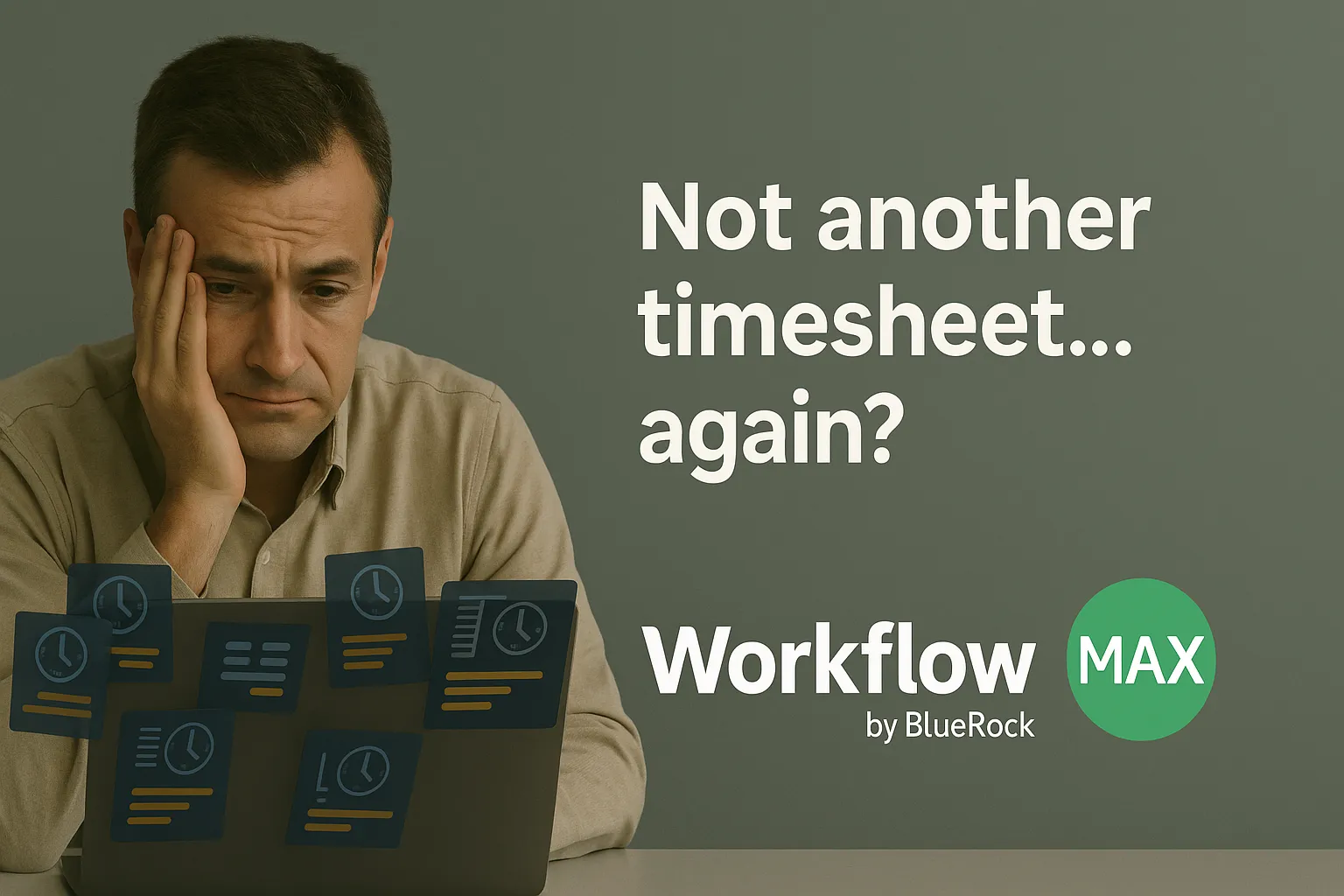
TL;DR For architects, engineers, accountants and designers still managing tax and project workflows in spreadsheets, Making Tax Digital (MTD) presents both a challenge and an opportunity. The key to thriving under MTD is adopting cloud accounting software that delivers real-time visibility, seamless compliance, and streamlined workflows. With integrated features like time tracking, job costing, and invoicing, workflowMax helps you move beyond spreadsheets into an era of greater control, profitability, and peace of mind.
MTD Is Here, Are Your Spreadsheets Ready?
Spreadsheets are flexible and familiar, but they weren't built for a digital tax world. But as regulatory requirements like Making Tax Digital (MTD) evolve, so must your tools.
For businesses still juggling spreadsheets and legacy systems, it's a wake-up call to modernise. And the stakes are high: getting MTD wrong risks non-compliance, cash flow delays, and reputational damage. Getting it right, on the other hand, opens the door to real-time financial clarity, operational efficiency, and scalable growth.
Why Spreadsheets Don’t Cut It Anymore
1. Not Designed for Compliance
Spreadsheets are prone to human error, lack audit trails, and aren’t built for tax reporting. Under MTD, HMRC expects digital links, real-time submissions, and a clear chain of financial data from invoice to tax return. Spreadsheets often break that chain.
2. Lack of Visibility = Lost Profit
Manual data entry hides critical information. Businesses often don’t know how profitable a job is until weeks (or months) after it’s completed. By the time you’ve reconciled costs and revenue, margin erosion has already occurred.
3. Disconnected Systems Mean Duplication and Waste
Service-based firms use a patchwork of tools: one for quoting, another for timesheets, yet another for invoicing and spreadsheets to tie it all together. This leads to siloed data, duplicated effort, and errors that become costly under the scrutiny of digital tax systems.
Cloud Accounting for MTD Compliance and Growth
Switching to cloud accounting turns a compliance chore into a strategic advantage, giving you a system that actually works for your business instead of against it
1. Real-Time Tax Reporting
Cloud platforms ensure that all transactional data is recorded and linked, ready for submission to HMRC. No manual uploads, no last-minute scrambling.
WorkflowMAX integrates directly with Xero, enabling seamless digital records and automatic updates to your accounting software, meeting MTD’s core requirements effortlessly.
2. End-to-End Job Visibility
With cloud tools, every quote, time entry, cost, and invoice is logged and visible in one place. You meet tax requirements and you understand your business better.
Example: An architecture firm can track how much time each employee spends on a planning application, compare it to the quote, and invoice accurately all without leaving the platform.
3. Efficiency Gains = Lower Admin Overhead
Automated workflows reduce the need for manual reconciliation. This is a game changer for firms used to spending hours each week copying data between spreadsheets and software.
By migrating to WorkflowMAX, firms have reduced untracked billable hours by up to 30% and cut invoicing time by 15%.
Best Practices for Migrating Off Spreadsheets
Step 1: Start with Your Workflow
Before choosing tools, map out your processes from enquiry to invoice. Where does information come in? Who needs to access it? Where does it break down?
Many firms discover that spreadsheets are masking deeper issues like unclear job ownership, duplicated effort or poor handover between departments.
Step 2: Choose the Right Cloud Platform
Look for platforms that offer:
- HMRC-recognised MTD capabilities
- Real-time reporting
- Integration with your accounting software (e.g., Xero)
- Core features like quoting, job costing, and invoicing
WorkflowMAX covers all the above while catering specifically to service-based firms like architects and engineers.
Step 3: Train Your Team
One of the reasons spreadsheets persist is that they’re familiar. Invest in onboarding that focuses on "real-world" navigation, especially time tracking and reporting.
WorkflowMAX partners recommend focusing training on navigation and use-case workflows, especially time tracking and reporting views.
Step 4: Keep It Simple
Overcomplicating your new system can be just as bad as using spreadsheets. Choose workflows that balance detail with usability. For instance, avoid setting up 100 task codes if your team will only use five.
How WorkflowMAX Supports Cloud Accounting for MTD
Seamless Integration with Xero
Automatically syncs invoices, payments, and purchase order keeping your accounting ledger MTD-ready.
Real-Time Profitability and WIP Reporting
Know what you’re making as you go, not months later. This is critical for service firms billing on milestones or retainers.
Invoicing & Quoting in One Place
Build quotes with full visibility of margins. Invoice faster and more accurately, reducing the risk of underbilling or delays.
Job Costing & Time Tracking
Track actual vs. budgeted costs in real-time. Capture every billable hour without spreadsheets, improving profitability by up to 20%.
Streamlined Project Visibility
From kickoff to closeout, everyone works from the same system. No more hunting for job codes or task statuses across 10 different tools.
Leave the Spreadsheets Behind
Making Tax Digital is more than a compliance initiative, it’s a chance to radically improve how you manage work and measure success. Spreadsheets have had their day. The future belongs to integrated, cloud-based platforms that help you see what’s really going on inside your business.
WorkflowMAX empowers architects, engineers, accountants, and designers to replace admin with clarity and guesswork with insight, so they can grow confidently in a digital-first world.
Ready to simplify MTD and strengthen your workflow?Explore how WorkflowMAXcan support your business, book a demo today.