

Product
Featured




Meet BlueRock Digital, the digital division of BlueRock, one of Australia's leading entrepreneurial advisory firms. What started in 2008 as a crew of eight accountants with a vision to do things differently has grown into a thriving multidisciplinary firm of over 300 business and wealth experts spanning accounting, law, wealth, finance, insurance, and digital.
The work is fast-moving, retainer-heavy, and constantly shifting based on what clients need that week.
Keeping the team resourced, profitable, and responsive it's a daily exercise.
Agency work has a particular kind of complexity that most project management tools aren't built for. Client demand doesn't follow a straight line. Priorities shift. Retainers need to be distributed across the month. The wrong system creates blind spots that cost money and erode client trust.
The pressure points were clear:
WorkflowMAX gave BlueRock Digital something no spreadsheet or generic project tool could: a system that moves as fast as they do.
The primary benefits Sarah No, Brand and Marketing Director, and her team rely on every day:
In an industry where the pace never really slows down, the best tools are the ones you stop having to think about. For BlueRock Digital, WorkflowMAX has become exactly that.
That reliability matters even more at BlueRock's scale. With 300+ people across multiple service lines and a client base that spans every industry vertical, the infrastructure has to hold up and keep up.

Meet Your HR Team, a Melbourne-based HR consultancy made up of seven specialists helping businesses across Australia navigate workplace and HR challenges. Their team works in a combination of remote and on-site, spending much of their time out in the field with clients. That means the tools they rely on can't be desk-bound.
With 12 years of industry experience behind him, founder Stephen Luxmoore built Your HR Team around one idea: get out there, engage with people, and help businesses grow.
The only thing standing in the way was everything that wasn't that.
Before WorkflowMAX, Your HR Team ran on a patchwork of Excel spreadsheets and Google Drives. For a small, fast-moving consultancy, it worked. Until the weight of managing it all started pulling time and energy away from the work that actually mattered.
The friction was showing up everywhere:
Twelve months ago, Your HR Team brought in WorkflowMAX. With the help of our implementation partner Apparatus Quo, the setup straightforward and fast: assessed the business, mapped out the needs, and got everything running without disruption.
The shift from scattered spreadsheets to a single, cloud-based platform was immediate, with features highlights that have improved end-to-end operations:
For Stephen, the measure of a great platform it's what it actually gives back. And what WorkflowMAX has given back is time.
Time to focus on clients. Time to grow the business. Time to do more of what he actually built Your HR Team to do.

Starting and scaling a business must be in the top 10 most difficult things anyone can do. How tough is the road to success?
Meet Engenera, a civil engineering consultancy firm specialising in structural work, water work, and road infrastructure, founded by Luphus Oosthuizen and Nico Strydom in 2024. Operating with a global footprint but firmly rooted in Australia, they came into the market with a clear vision: build a firm that was lean, competitive, and set up to scale from the very beginning.
After two years of laying the foundation, the projections for growth are starting to take shape. But how do you move from zero to profit without the tools, systems, and infrastructure that established firms take for granted?
Every new business faces the same early temptation: keep costs low, use what you know, and figure out the rest later. For Engenera, like most firms in their early stages, that meant spreadsheets.
Excel is an easy call at the start. It's familiar, flexible, and costs nothing. When you're a small team trying to get jobs across the line, it does the job. Until it doesn't.
The problem with spreadsheets isn't what they can do, it's what they can't scale into. As Engenera's project load grew, the cracks started showing:
The business was growing. The tools weren't keeping up.
Nothing like a friend and colleague to find the necessary tools you need when you need them. The path to WorkflowMAX came through a trusted source: a colleague in New Zealand who had used the platform in a previous business and didn't hesitate to recommend it.
From there, Engenera brought in Setupmysystem, a WorkflowMAX implementation partner led by Dan Roggenkamp. The process was exactly what a growing firm needs it to be: fast, structured, and painless. They assessed what Engenera had, identified what they needed, and got the platform up and running without disrupting operations.
What WorkflowMAX gave them from day one was a real-time operating system for project profitability.
For a firm only two years in, Engenera thinks about the long game. They have the mix of newcomer effervescence with the vision of a veteran, the kind of strategic confidence that comes from having the right infrastructure in place early.
WorkflowMAX becomes the perfect partner to solve today's problems while creating the base for building the next decade on.
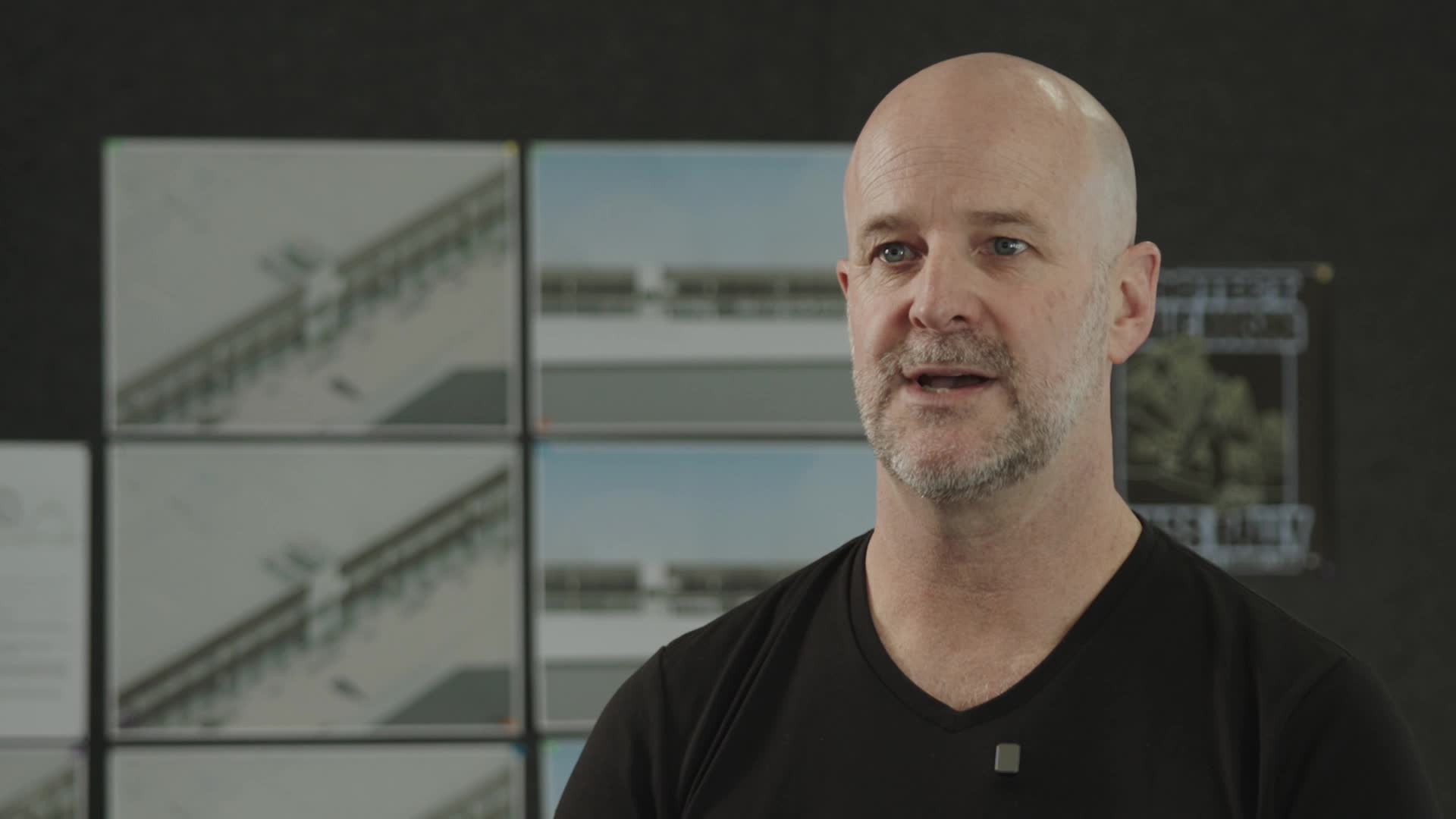
Meet Guymer Bailey Architects, a multidisciplinary architecture and landscape firm based in Australia. Grounded in a love of design and the intersection between architecture, landscape, and interior design, they've spent 36 years building some of the most meaningful spaces, and an equally strong business to back it up.
Their specialisation in education, social housing, and justice sectors, demands top-notch quality. Not just in what they build, but in how they manage it: accurate reporting at every stage, clarity in expenditure, and project information tailored to each client's specific needs.
Today, with a team of 70 and still growing, GB-A is proof that operational and creative excellence can go hand in hand.
Like many architecture firms, GB-A is no stranger to the growing pains of running a project-heavy business. Unclear visibility into where each project stood, delays in invoicing, and workflows that couldn't keep up with an expanding team. These are the kinds of blind spots that make profitability hard to see and achieve.
With 36 years in the industry, they'd learned a thing or two about building spectacular infrastructure. The next challenge was applying that same rigour to managing the business.
They focused on the areas holding them back:
In 2015, GB-A introduced WorkflowMAX as their Job Profitability OS to handle their end-to-end operations, and they haven't looked back.
Over the past decade, they've been able to refine how they work across four core areas:
Ten years is a long time in any industry. For GB-A and WorkflowMAX, it's been a decade of shared growth.
What started as a solution to specific operational pain points has become something deeper: a platform so embedded in GB-A's daily rhythms that the team barely has to think about it. It's just how work gets done.
That adoption extends to new hires, too. Talent in all teams is getting up to speed on WorkflowMAX is fast, and the depth of what the platform can do reveals itself over time.

By Ryan Kagan
TL;DR: Spreadsheets work until they don’t. For architecture firms, the breaking point usually comes when projects multiply, teams grow, and the gap between what the data shows and what is actually happening becomes too wide to ignore.
Architecture firms often begin with spreadsheets because they are flexible, familiar, and require no onboarding. In the early stages, they can support basic project tracking and financial oversight well enough. The problem is that “well enough” has a ceiling, and firms tend to hit it before they realise it.
The shift from manageable to problematic is rarely sudden. It happens gradually, through small inefficiencies that accumulate until they start affecting profitability and delivery quality. These are the signs that the ceiling has been reached.
Spreadsheets are static by nature. They require manual updates, exist in multiple versions across teams, and reflect the state of a project as of the last time someone edited them, not as of right now. When project leads need to make decisions, they are working from information that may already be wrong.
Real-time visibility requires a system where job management, time tracking, and financial data are connected and updated continuously. Our Reporting and Dashboards feature consolidates this into live job financial summaries, so the picture you see reflects what is actually happening on the project.
When time tracking lives in a spreadsheet or a separate tool with no connection to the project, it becomes something people do when they remember, usually at the end of the week with whatever detail they can reconstruct. The result is time data that cannot be trusted for cost tracking or billing.
Time Tracking needs to be part of the daily workflow, linked directly to specific jobs. When it is embedded into the project process rather than treated as a separate administrative task:
●recorded hours feed directly into budget comparisons
●invoicing requires no manual reconstruction
●project leads have accurate cost data throughout delivery, not just at the end
Manual project management creates its own workload. Updating progress across multiple spreadsheets, reconciling resource allocation, and compiling financial reports by hand all take time that should be spent on actual delivery. And because each of those tasks is done separately, the risk of errors and inconsistencies is constant.
A centralised Job Management system replaces this with a single, consistent record for each project. Teams work from shared, up-to-date information, and the administrative overhead of keeping multiple documents in sync disappears.
Spreadsheets are inherently backward-looking. They tell you what happened, not what is happening. By the time a budget overrun becomes visible in a manual system, the project may already be significantly over, with no opportunity to course-correct.
Proactive financial management requires connecting:
●estimating and quoting to define budgets before work begins
●time tracking to capture actual effort as it accumulates
●reporting to compare the two in real time and surface problems while there is still room to adjust
When billing relies on manually compiling information from spreadsheets, delays are inevitable. So are errors. Reconstructing what was done on a project in order to invoice for it is a symptom of a disconnected system, and the consequences show up directly in cash flow.
Our Invoicing feature connects billing directly to tracked time and job progress, so invoices are generated from actual work completed rather than assembled from memory. Billing cycles shorten, errors reduce, and the gap between work delivered and revenue received closes.
Architecture projects generate significant documentation: briefs, scope agreements, drawings, revisions, and client approvals. When those files live in different places with no connection to the project itself, traceability suffers. Finding the right document at the right moment becomes a time-consuming exercise, and demonstrating what was agreed or when something changed becomes difficult.
Document Management keeps all relevant files linked to the job, creating a structured and accessible project record that supports both day-to-day coordination and longer-term compliance requirements.
Spreadsheets and accounting systems do not talk to each other. Keeping them aligned requires manual data entry, regular reconciliation, and ongoing corrections when the two diverge. This is time-consuming under normal circumstances and increasingly unreliable as project volume grows.
Our integration with Xero and QuickBooks removes this gap. Invoicing data transfers directly between systems, financial records stay consistent, and the reconciliation workload that currently falls on your team largely disappears.
The final sign is the most telling. If adding a new project, a new team member, or a new client creates more administrative complexity rather than just more work, the system is not scaling with the business. Spreadsheets that were manageable with three projects become unwieldy with ten.
Use Customisation to adapt job structures and workflows as the firm evolves, ensuring the platform fits how you work rather than the other way around.
Outgrowing spreadsheets is not a failure of process. It is a signal that the firm has grown to a point where informal systems can no longer provide the structure, visibility, and reliability that complex project management requires. The firms that recognise this signal early and act on it gain a meaningful operational advantage over those that wait until the problems become impossible to ignore.
WorkflowMAX provides the foundation for that transition, connecting estimating, delivery, time tracking, and invoicing into a single workflow that scales with the firm.
Explore how WorkflowMAX streamlines job management from quote to invoice.

By Ryan Kagan
TL;DR: Most creative agencies choose project management software based on features or team preference, not on how well the system supports end-to-end workflows. The result is a platform that handles tasks but leaves cost tracking, invoicing, and financial visibility disconnected from the work itself.
Creative agencies operate in fast-moving environments where scope changes, deadlines shift, and client expectations evolve constantly. Choosing the wrong project management platform does not just create friction. It directly erodes profitability, slows down billing, and forces teams to compensate with spreadsheets and manual workarounds.
The mistakes agencies make when choosing these tools tend to follow a predictable pattern.
Task tracking and project management are not the same thing. Many agencies select platforms that are excellent at showing who is doing what, but offer no visibility into budgets, resource allocation, or financial performance. When the project is delivered and it is time to invoice, nobody has a clear picture of what was actually spent.
A system built around jobs rather than tasks gives you a single source of truth for each project. Job Management in WorkflowMAX organises tasks, resources, and timelines within a structured framework, so project leads can track progress and financial performance in the same place.
Weak estimates create problems that compound throughout a project. When scope is not clearly defined, costs are underestimated, and teams start work with incomplete information, the quote becomes useless as a management tool. By the time the gap between estimate and reality is visible, it is too late to close it.
Estimating and Quoting should define tasks, deliverables, cost assumptions, and pricing structure before a project begins. That estimate then becomes the operational baseline against which delivery and billing are measured, connecting directly into job setup and time tracking rather than sitting in a separate document nobody refers back to.
Time tracking is treated as an administrative task in many agencies, something recorded at the end of the week with whatever detail can be remembered. That approach produces time data that cannot be trusted, which means cost tracking is unreliable and invoicing becomes a reconstruction rather than a reflection of actual work.
Time Tracking needs to be embedded in the daily workflow and linked directly to specific jobs. When it is:
Many project management platforms are built around delivery and offer little insight into financial performance. Agencies using these tools often have no clear view of whether a project is profitable, how actual costs compare to estimates, or where spending is exceeding expectations until the project is closed.
Our Reporting and Dashboards feature addresses this by providing real-time job financial summaries that draw on time tracking, job management, and invoicing data. The ability to spot a problem mid-project and adjust is far more valuable than a detailed post-mortem.
When invoicing is handled outside the project management system, the consequences are predictable: delayed billing cycles, errors that require correction, and an administrative burden that compounds with every project. Reconstructing what was done in order to bill for it is a sign that the system is not working.
Invoicing should connect directly to tracked time and job progress. WorkflowMAX generates invoices based on actual work recorded against each job, which shortens billing cycles, reduces errors, and improves cash flow without additional administrative effort.
Creative agencies generate significant documentation throughout a project: briefs, scope agreements, revisions, approvals, and client communications. When those files are scattered across email threads, shared drives, and separate tools, traceability suffers. Proving what was agreed, what changed, and when becomes difficult when it should be straightforward.
Document Management keeps all relevant files linked to the job, so the full history of a project is accessible in one place. This matters both for:
Manual data transfer between project tools and accounting systems is one of the most persistent sources of errors and delays in agency operations. Reconciling two systems that were never designed to work together adds administrative work and introduces inconsistencies that take time to find and fix.
Our integration with Xero and QuickBooks eliminates this gap. Invoicing data transfers directly, project and financial records stay aligned, and the reconciliation workload drops significantly.
Creative agencies manage fixed-fee projects, retainers, and time-based work, often simultaneously. Platforms that lack flexibility force agencies to reshape their processes around the tool rather than the other way around. Over time, that friction accumulates and teams find workarounds that undermine the system’s value.
Use Customisation to adapt job structures and workflows to your specific needs, whether that means different billing models, varied project scopes, or unique delivery processes.
Most of these mistakes share a common root: evaluating software by its feature list rather than by how well those features connect. A platform where estimating, job management, time tracking, invoicing, and reporting operate as a single workflow is fundamentally different from one where those capabilities exist in isolation, even if the feature list looks similar on paper.
Agencies that build on an integrated foundation gain:
Discover how WorkflowMAX can help you gain better project visibility.

By Ryan Kagan
TL;DR: There’s a specific point where making it work stops working. For growing architecture firms, generic project tools eventually hit a ceiling. They’re great for checking off tasks, but they leave a giant hole where your financial visibility and document control should be. To scale without the chaos, you need a system that understands the whole lifecycle, not just a digital to-do list.
Architecture firms rarely struggle because of a lack of design expertise. Challenges emerge when project complexity increases and existing systems can no longer keep up. Generic tools may hold up in the early stages, when teams are small and projects are relatively straightforward. But as firms grow, the gaps become harder to ignore.
Managing multiple project phases, tracking costs accurately, handling scope changes, and billing clients correctly are not problems you can solve with a to-do list. They require systems built around the full lifecycle of a project, not just its tasks.
Most generic platforms are built around tasks and deadlines. That is useful up to a point, but architecture projects involve much more:
A tool that tracks whether a task is complete cannot tell you whether the project is profitable. Structured job management changes this. WorkflowMAX organises tasks, resources, and job progress within a single environment, so all project information lives in one accurate record rather than scattered across spreadsheets and inboxes. Project leads can track progress without switching between tools, and teams work from consistent job structures that reduce ambiguity and improve coordination.
One of the most significant limitations of generic tools is financial opacity. Without real-time insight into job performance, firms often discover budget issues after the work is done, when there is nothing left to adjust.
Effective financial oversight depends on connecting several components:
Our Reporting and Dashboards feature brings these together into real-time job financial summaries, giving project leads the visibility to identify drift early, adjust resource allocation, and improve billing accuracy before it becomes a problem.
Architecture projects change. Scope evolves, revisions accumulate, and approvals need to be documented. Generic tools rarely provide a clear record of what was originally agreed, what changed, and how those changes affected cost and timeline. That creates both commercial and legal risk.
A structured approach connects the full arc of a project:
Every stage is documented and traceable, which matters when a client questions an invoice or a scope change needs to be justified.
In many architecture firms, time is recorded at the end of the week, outside the main workflow, and without any direct link to job budgets. By that point, the detail is lost and the damage to financial accuracy is already done.
Time tracking needs to be embedded in the day-to-day job process to be useful. Our Time Tracking feature links recorded time directly to jobs, enabling:
Generic tools almost always sit separately from accounting systems, which means someone has to manually transfer data between them. That creates duplicate work, reconciliation errors, and delayed reporting.
Our integration with Xero and QuickBooks eliminates this gap. Invoicing data transfers directly, project and financial records stay aligned, and the administrative workload drops significantly. The result is a more reliable financial workflow with less room for error.
Architecture firms take on fixed-fee projects, time-based engagements, and multi-stage contracts, sometimes all at once. Rigid platforms force firms to reshape their processes to fit the tool rather than the other way around.
Use Customisation to adapt job structures and workflows to your specific needs, whether that means different billing models, unique delivery processes, or evolving business requirements.
Outgrowing generic tools is not a failure. It is a sign that the firm is taking on more complex work and needs infrastructure that matches that complexity. The firms that scale successfully are not the ones with the most features in their stack. They are the ones that have connected their estimating, delivery, time tracking, and financial reporting into a single, coherent workflow.
WorkflowMAX provides that foundation, helping firms move beyond patchwork systems and build operations that support long-term growth with clarity and control at every stage.
Explore how WorkflowMAX streamlines job management from quote to invoice.

By Ryan Kagan
TL;DR: Architecture is too volatile for a static checklist of features. While generic platforms offer a bag of tools, they rarely offer a way to connect them, leaving firms to bridge the gaps manually as scopes shift and projects evolve. The real divide isn't between those who have a system and those who don't; it’s between firms stuck in a "feature hunt" and those building a unified engine that links estimating, delivery, and time tracking in a single, breathless flow.
Growth demands more than just a place to store tasks; it requires a live pulse on financial performance. The goal isn’t to find the "perfect" individual feature, but to capture the entire story of a project from the first handshake to the final invoice. When your workflow is a single, unbroken thread, you aren't just managing data, you're protecting the margins that allow your firm to actually build.
Most project problems originate before work even begins. When scope, tasks, and costs are not clearly defined at the quoting stage, teams start with incomplete information and billing becomes a best guess rather than a reflection of actual work.
Use Estimating and Quoting to:
A well-structured estimate does more than win a job. It becomes the commercial foundation for the entire project.
Generic tools tend to separate planning from execution. The result is that project leads end up reconciling information across multiple systems to get a picture of where things actually stand.
Structured Job Management in WorkflowMAX solves this by giving teams a centralised view of tasks, timelines, and resources, so everyone works from consistent data and project leads can track progress without chasing updates.
Time recorded at the end of the week, outside the main workflow, and without any link to job budgets is time data that cannot be trusted. It distorts cost tracking, undermines invoicing accuracy, and leaves project leads making decisions based on incomplete information.
Effective Time Tracking needs to be embedded in the day-to-day job process. Our platform links recorded time directly to specific jobs, enabling:
End-of-month reviews tell you what went wrong. Real-time reporting gives you the chance to do something about it. Without clear visibility into job financial performance, budget versus actual comparisons, and profitability per project, decision-making stays reactive.
Our Reporting and Dashboards feature consolidates time tracking, job management, and invoicing data into real-time job financial summaries. Project leads can:
When invoicing is disconnected from project data, the consequences are predictable: delayed billing cycles, errors that require correction, and an administrative burden that slows down cash flow. Linking invoicing directly to tracked work removes the manual step of reconstructing what was done and what should be charged.
WorkflowMAX generates invoices based on actual time and costs recorded against each job, reducing errors and speeding up the billing process.
Architecture projects generate significant documentation, from initial briefs and scope agreements to drawings, revisions, and client approvals. When those files are scattered across email threads and shared drives, traceability suffers and compliance becomes difficult to demonstrate.
Document Management keeps all relevant files linked to the job, so the full history of a project is accessible in one place. Combined with:
Documentation becomes part of the workflow rather than something assembled after the fact.
Manual data transfer between project tools and accounting systems is one of the most common sources of errors and delays in architecture firms. Reconciling two systems that were never designed to talk to each other adds administrative work and introduces inconsistencies that take time to resolve.
Our integration with Xero and QuickBooks allows invoicing data to transfer directly, keeping project and financial records aligned without manual intervention.
Architecture firms take on different project types with different workflows and billing models. A platform that cannot adapt to that variation forces firms to compromise their processes to fit the tool.
Use Customisation to adapt job structures and workflows to your specific needs. And with Lead Management, the connection between a new opportunity and a structured job happens within the same system, creating continuity from the first client conversation through to delivery and billing.
Selecting the right platform is not about ticking off a feature list. It is about ensuring those features connect in a way that supports clarity, consistency, and control across every project. Firms that build on that kind of integrated foundation gain:
Discover how WorkflowMAX can help you gain better project visibility.

By Ryan Kagan
TL;DR: In the creative world, a project is only as strong as its handoffs. Most agencies get slowed down by blind spots, where the quote doesn't talk to the delivery team, and the delivery team doesn't talk to finance. When picking a platform, look past the feature list and ask one question: Does this turn my disparate tasks into a single, fluid motion from start to finish?
For creative and design agencies, project management platforms are the backbone of profitability and client delivery. Unlike product-based businesses, agencies operate in a project-driven environment where time, scope, and cost are constantly shifting.
The right system supports the full project lifecycle, from initial enquiry through to final invoice. The wrong one leaves teams quoting in one tool, tracking time in another, and reconciling everything manually at month-end.
Most evaluation processes fail. Why? Because firms compare features instead of workflows. Before looking at any platform, map where your inefficiencies actually live.
Common pressure points include:
These problems rarely come from one broken tool. They come from tools that don’t communicate with each other.
A more useful exercise is mapping your ideal end-to-end workflow: lead captured, quote approved, job delivered, time and costs recorded, invoice issued, performance reviewed. A strong platform supports each of those stages without requiring manual handoffs between systems. WorkflowMAX is built around exactly this structure, connecting lead management, Estimating and Quoting, Job Management, Time Tracking, Invoicing, and Reporting into one cohesive workflow.
When evaluating platforms, the right questions aren’t about feature lists. They’re about continuity:
If your tools don't talk to each other, your team has to do the talking for them. That’s where the mistakes happen. Tools like WorkflowMAX create a straight line from quote to cash. By linking recorded hours directly to your budgets and invoices, it eliminates the guesswork and the double-handling. It’s simple: you can’t build a big agency on a shaky foundation.
One of the most critical evaluation criteria is how well a platform supports financial oversight. Many creative agencies operate without clear visibility into real-time job performance, which means decisions are reactive rather than proactive.
Look for a system that gives you:
Reporting and Dashboards in WorkflowMAX delivers this by consolidating time tracking, job management, invoicing, and financial data into a single view, so you can monitor profitability continuously rather than retrospectively.
Agencies increasingly need to prove what was agreed, when it changed, and who approved it, especially when working with larger clients. Without structured systems, it becomes difficult to confirm completion, demonstrate scope changes, or maintain a clear record of approvals.
A suitable platform should allow you to:
Document Management in WorkflowMAX handles this by keeping files organised within each job. Combined with Estimating and Quoting to define original scope, Job Management to track execution, and Reporting to confirm completion, documentation becomes part of the workflow rather than an afterthought.
Many agencies already use Xero or QuickBooks but struggle with the manual work of keeping project and financial records in sync. Duplicate data entry, reconciliation errors, and delayed reporting are all symptoms of disconnected systems.
When evaluating platforms, prioritise direct integration with your accounting software. WorkflowMAX’s Xero and QuickBooks integration allows invoicing data to transfer seamlessly, keeps project and financial records aligned, and significantly reduces manual reconciliation.
Creative agencies vary widely in how they structure work, whether fixed-fee projects, retainers, or hourly billing. Platforms that lack flexibility force you to adapt your processes to the tool rather than the other way around.
Customisation in WorkflowMAX lets firms personalise quotes, invoices, reports and more, so the process fits the business without inventing unsupported workflows or one-off workarounds.
Selecting project management software is not just about solving today’s problems. As you grow, you will run more projects simultaneously, manage larger teams, and face greater financial oversight requirements.
The firms that scale well are rarely the ones with the most capable teams in isolation. They are the ones with the clearest systems. A platform that connects estimating, delivery, and financial tracking gives you the foundation to scale without rebuilding your systems from scratch.
Evaluating platforms for creative and design agencies ultimately comes down to one principle: structure. Agencies that rely on disconnected tools struggle with visibility, profitability, and documentation. Those that implement integrated systems make faster, more confident decisions.
WorkflowMAX provides that operational backbone, connecting every stage from lead management and quoting through to invoicing and reporting into a single, cohesive system.
Discover how WorkflowMAX can help you gain better project visibility.

By Ryan Kagan
TL;DR: The bigger the client, the higher the expectations. But is your firm prepared to manage scope, costs, documentation and billing with consistency when project volume, stakeholder scrutiny and delivery risk?
The firms that handle this well do not rely on memory, spreadsheets or disconnected tools. They build repeatable workflows around estimating and quoting, job management, time tracking, document management, invoicing, and reporting and dashboards.
Professional services firms rarely struggle because they lack expertise. More often, they struggle because growth exposes weak internal systems. What worked for a ten-person team handling straightforward jobs starts to break down when you take on larger clients, more stakeholders, more commercial pressure and tighter expectations around visibility.
Larger clients buy more. They also expect more structure.
They expect clearer quotes, tighter commercial controls, better document handling, more reliable reporting and fewer delays between delivery and billing. When those expectations hit a business that still relies on manual workarounds, problems surface quickly:
This is where the strain of growth really hits. The shift to platforms like WorkflowMAX is about getting firms off fragile spreadsheets and into a single source of truth where every client and every live job is visible on one central board. It creates a connected thread of visibility that follows the work from the first enquiry through to budgeting, invoicing, and final reporting.
True scalability begins the moment when your data is no longer scattered.
The biggest mistake firms make is treating operational readiness as a delivery problem. In reality, it starts much earlier.
Many delivery issues begin with a loose quote. If scope, tasks, costs and assumptions are not clear at the estimating stage, job teams inherit uncertainty from day one.
Use Estimating and Quoting to build more structure into the commercial start of the job. This is where you can break quotes into specific tasks and costs, so the delivery team starts with clearer expectations and finance has a stronger basis for invoicing later. That matters when enterprise clients want detail, traceability and fewer billing disputes.
A quote should not sit apart from delivery. It should become the start of a controlled workflow.
That is where Job Management matters. Once the job is active, teams need a single place to manage tasks, people and timelines. The goal is not simply to create a job record. It is to create a structure the whole firm can work from, so operations, delivery and finance are not interpreting the same project in three different ways. That “single, accurate record” principle is central to the WorkflowMAX writing guidance and reflects how the product should be positioned.
A lot of firms respond to enterprise pressure by adding more processes. More fields. More spreadsheets. More approval steps outside the system.
That usually backfires.
The better approach is to make the right information easier to capture inside the workflow people already use.
If time is logged late, job profitability becomes harder to read and invoicing slows down. That is not just an admin problem. It is a commercial problem. And nobody wants that.
Use Time Tracking as part of the daily job routine, not as an end-of-week clean-up task. When time sits close to live work, project leads can see whether effort is tracking against expectations earlier. Finance gets cleaner records. Leaders get a more reliable picture of job performance.
Enterprise clients often expect stronger evidence of what was agreed, what changed and what was delivered. You do not need to invent a separate “compliance” system to support that. You need better operational record-keeping.
Larger clients increase the cost of late decisions. If leaders only discover margin pressure after the invoice goes out, the fix comes too late.
Effective reporting is about clarity, not complexity. WorkflowMAX provides the essential visibility firms need through job financial summaries and real-time variance tracking. Rather than vague dashboards, it offers a practical way to review job performance and keep financials on track in real time.
For growing firms, that visibility supports three practical behaviours:
One implementation partner described this kind of financial visibility as a major reason firms value the platform, especially when they need stronger job costing and reporting across the full workflow.
Preparing for enterprise-level expectations is less about a 'big bang' change and more about operational discipline.
True visibility shouldn't be a month-end surprise. Growth requires a connected operating model, a central 'engine' like WorkflowMAX, that bridges the gap between the first enquiry and the final invoice, turning your data into a single, cohesive story.
Enterprise clients raise the standard, but they also reveal where your business is already under strain.
The firms that cope best are not necessarily the largest or the most complex. They are the ones with clearer estimating, tighter job control, cleaner records and better financial visibility across the life of the job.
That is the real shift behind preparing internal operations for enterprise-level client expectations. You are not just adding processes. You are building a system your team can trust.
Explore how WorkflowMAX streamlines job management from quote to invoice.

By Ryan Kagan
TL;DR: As demand grows, many agencies do not struggle because of a lack of work. They struggle because their systems cannot keep pace with the volume, pace and financial complexity of that work. The answer is not more admin or more spreadsheets. It is a more structured operating model that connects quoting, delivery, time, invoicing and reporting in one place. More work should mean more opportunity.
That pattern is familiar across professional services. An agency wins more projects, adds more clients, hires more people, and then discovers that its delivery model still depends on scattered files, manual handoffs, delayed timesheets and end-of-month finance checks. The work is flowing, but operational visibility is not.
For agencies, future-proofing operations is not about chasing every new tool. It is about building a delivery model that can handle more demand without losing margin, control or confidence.
Future-proofing starts with a mindset shift. The goal is not simply to get work out the door. It is to create a reliable operating backbone that scales with the business.
For agencies, that usually means fixing five pressure points first:
When those issues sit in separate systems, scale becomes expensive. Teams spend more time reconciling data, checking versions and chasing updates. That slows delivery and makes it harder to protect profitability.
The better model is connected and deliberate.
Lead information should flow into estimates. Estimates should inform live jobs. Time and costs should be captured against the right work. Invoices should reflect what was delivered. Reports should show leaders where the pressure is building.
The riskiest part of any project is the handover. When documentation is scattered and delivery assumptions are locked in someone’s head, you’re betting on luck instead of a system. As demand increases, that lack of clarity doesn't just slow you down, it scales your mistakes
A future-proof agency needs one version of the truth from the first enquiry onwards. That is the role of Lead management and Estimating and quoting.
Lead management helps agencies keep prospects, conversations and opportunities visible before work begins. Estimating and Quoting then turns that commercial intent into a structured scope, with tasks, costs and pricing laid out clearly. WorkflowMAX’s source-of-truth guidance specifically supports describing this as breaking quotes into specific tasks and costs, rather than making broader claims.
Once the quote is accepted, Job management becomes the bridge between sales and delivery. Instead of rebuilding the job from scratch, agencies can use the agreed commercial structure as the basis for execution. That matters when volumes increase. Teams move faster when they are not recreating information or chasing missing context.
Document Management also matters here. Future-proofing is not just about job data. It is about keeping briefs, approvals, files and supporting documents connected to the work, so teams can find what they need without switching between folders and inboxes.
Growth can hide margin problems for a while. An agency may look busy, even successful, while time leakage, under-scoped work and inconsistent cost capture slowly erode profitability.
The drive for a better system usually starts with a specific kind of pain: too many tools that don't talk to each other and manual workarounds that eat up the day. To scale, agencies need to move past "rough estimates" and toward the precision of tools like WorkflowMAX. By integrating everything from enquiry to invoice, you replace poor visibility with clear, actionable profitability reporting and high-level job costing.
Time tracking only helps when it is timely, accurate and tied to the right work. If staff fill in timesheets late or log hours against vague buckets, leaders get weak data and weak decisions.
No two agencies structure work in exactly the same way. Different service lines, deliverables and approval paths mean the system must adapt to the business, not the other way round.
That is where Customisation matters. It supports agencies that need to tailor quotes, invoices, reports and other operational records to fit how they sell and deliver work. That flexibility becomes especially useful as demand rises and agencies need to standardise without becoming rigid.
For agencies working with regulated clients, fixed-fee engagements or detailed audit expectations, growth raises another challenge: compliance visibility.
That does not always mean formal compliance software. More often, it means being able to show what was agreed, what changed, what was delivered, and what was billed.
When demand increases, leaders need faster answers to simple questions.
Which jobs are drifting? Which clients are more profitable? Where are teams over-servicing? Which quotes are consistently underestimated? Where is invoicing lagging?
If agencies can only answer those questions at month end, they are already behind.
WorkflowMAX has a trong reporting system.
Reporting and dashboards helps agencies review job financial summaries, progress and business performance using the reporting tools that exist, rather than relying on spreadsheet collation after the fact.
In practice, that gives agency leaders a more dependable rhythm for decision-making. They can review job performance earlier, question overruns sooner, and adjust before a problem becomes normal.
Agencies do not future-proof operations by adding complexity. They do it by making work easier to see, easier to control and easier to bill accurately.
That means building a system where leads, quotes, jobs, documents, time, invoices and reports support each other. It means replacing spreadsheet dependence with a more structured operating model. And it means giving leaders enough financial and operational clarity to act before pressure turns into rework or lost margin.
The firms that handle rising demand best are not always the biggest. They are usually the ones with better structure.
Explore how WorkflowMAX streamlines job management from quote to invoice.

TL;DR: As architecture practices grow, operational planning gets harder. More projects, more stakeholders, more fee pressure and more compliance requirements create gaps between what was sold, what is being delivered and what is being billed.
The key is to build a planning system that connects estimates, job delivery, time capture, document control and invoicing. Growth becomes much easier when every project follows a consistent path and leaders can see cost, progress and financial signals early.
Growth exposes weak systems.
A smaller architecture practice can often get by with informal handovers, spreadsheet-based fee tracking and a lot of project knowledge living in people’s heads. Expansion changes that. Once you are managing more projects across more stages, with more staff and more consultants involved, those informal habits start to create risk.
The issue is not simply workload. It is control. Partners interviewed during WorkflowMAX’s positioning work repeatedly described the pain of fragmented tools, spreadsheet reliance and weak operational visibility. One implementation partner put the baseline problem very plainly: the value of the system starts with no longer running the practice from spreadsheets, while giving the business one place to see clients and live jobs. Another described the strongest use case as an end-to-end workflow from enquiry through budgeting, job activation, invoicing and reporting, rather than a mix of disconnected tools.
For architecture firms, that matters because expansion usually increases pressure in five areas at once:
Operational planning needs to hold all five together.
Operational planning works best when it follows the real shape of an architecture job. That means planning cannot stop at the quote. It must continue through job setup, document control, time capture, progress monitoring and invoicing.
This is also where WorkflowMAX fits naturally. The platform is positioned internally as an end-to-end operating system for service firms, and partner feedback consistently highlights the value of connecting the beginning of the workflow to the financial outcome at the end.
Many growing firms underprice work because the estimate is treated as a sales step rather than an operational decision. In practice, the quote sets the commercial logic for the whole job.
For expanding firms, this improves planning in three ways:
The goal is not simply to win more work. It is to win work that your team can deliver profitably and predictably.
A quote only helps if the same logic flows into live delivery. That is where Job management becomes operationally important.
Rather than treating delivery as a loose collection of tasks, use Job management to organise active jobs, tasks and people in one place, and to track progress against agreed timelines. That matters for architecture firms because expansion usually creates variation in how teams run jobs. Standardising the way jobs are set up, monitored and reviewed reduces rework and makes reporting far more reliable.
One of the biggest planning mistakes growing architecture practices make is assuming that standardisation and flexibility are opposites. They are not.
You need a consistent operational backbone, but you also need room for different fee structures, project types and internal responsibilities. That is exactly the sort of balance implementation partners described when talking about how firms get value from WorkflowMAX: the system becomes useful when it is flexible enough to fit the firm, but simple enough for teams to use consistently.
The official feature name here is Customisation. Use it to personalise the way your firm handles quotes, invoices, reports and related workflows, rather than forcing every team into a generic structure.
For operational planning, that helps in practical ways:
Operational planning in architecture is never just about time and fees. It also depends on good information control.
Use Document management to keep essential project records connected to the live job rather than scattered across inboxes and folders. That reduces friction during handovers, makes review points clearer and helps teams prepare for client, consultant or compliance-related checks without hunting for key files.
This is particularly important as firms expand because document chaos scales faster than most leaders expect. More projects mean more versions, more approvals, more supporting material and more risk of teams working from the wrong information.
Growth often hides margin leakage rather than fixing it. New revenue can look healthy while project costs drift quietly in the background.
That is why operational planning needs an active cost-control layer, not just a year-end financial review. WorkflowMAX’s internal positioning work leans heavily on this point: the real problem for service firms is not a lack of activity data, but a lack of visibility into what jobs are actually worth and whether margins are holding up while the work is still live.
The official feature name is Time tracking. In practice, this is how you compare the plan to the real cost of delivery.
For architecture practices, accurate time capture helps you:
This visibility is delivered through Reporting and dashboards. It also cautions against inflated language such as “advanced analytics” or unofficial “WIP dashboards” unless the article translates that claim into the official reporting capability behind it.
The best operational planning strategies for expanding architecture practices are rarely glamorous. They are usually about consistency.
Set clearer estimates. Run jobs through a repeatable structure. Keep documents tied to delivery. Capture time properly. Review the right financial signals before a project drifts too far. Bill in a way that reflects the reality of the work.
That is what lets a growing firm stay controlled as complexity increases. Structured systems matter because scale amplifies every weak handover, every missing record and every pricing mistake. WorkflowMAX supports that structure through connected features across Estimating and quoting, Job management, Document management, Time tracking, Invoicing, Reporting and dashboards, Lead management and accounting integrations, giving firms a stronger operational backbone as they grow.
Explore how WorkflowMAX streamlines job management from quote to invoice.